
RSS

Ontario Landlord-Tenant Law Changes 2025: RTA Updates, Rent Increase Rules, and Compliance Guide

Navigating Ontario's rental market has become increasingly complex, especially with recent updates to the Residential Tenancies Act (RTA). Whether you're a seasoned landlord or just starting your rental property journey, understanding these changes is crucial for compliance and success. Here's everything you need to know about the latest RTA updates and how they affect your rental business.

Understanding the Residential Tenancies Act

The Residential Tenancies Act serves as the cornerstone of Ontario's rental regulations, governing how leases are structured and ensuring tenant rights are protected. The Act establishes clear guidelines for rent increases, eviction procedures, and sets specific restrictions on when landlords can issue notice to tenants to vacate their properties.

Major Rent Control Changes

One of the most significant updates to the RTA involves expanded rent control measures. The new changes now extend rent control to private rentals, implementing an annual cap on rent increases that affects all rental properties in Ontario.

Current Rent Increase Limits

  • 2025 rent increase: 2.5%

  • 2024 rent increase: 2.5%

These standardized rates provide predictability for both landlords and tenants, though they also mean landlords must carefully plan their rental income projections and property maintenance budgets.

Selling Your Rental Property: New Rules and Penalties

The updated RTA has introduced important changes regarding property sales that every landlord should understand.

Family Occupancy Requirements

If you or your immediate family members want to move back into the rental property for family reasons once the lease term expires, you must be prepared for financial consequences. Under the new rules, landlords are subject to a penalty equal to one month's rent that must be paid to the tenant. Additionally, you'll need to complete the N11 form to properly terminate the tenancy.

Buyer Occupancy Provisions

The rules are different when selling to a buyer who will occupy the property. When your property is sold to a buyer who will be using the premises as their principal residence for a minimum of one year, there is no penalty required to be paid to the tenant. This provision helps facilitate legitimate property sales while protecting tenants from unnecessary displacement.

Important Notice Requirements

You can only terminate a tenancy if you're moving into the unit for family reasons or if you have a buyer who will be moving in, whether under a lease or on a month-to-month basis. The 60-day notice period is calculated from the day rent is normally paid, not from calendar days. Crucially, you cannot give tenants notice to leave before you have secured a buyer.

Current Toronto Rental Market Rates

Understanding market rates helps landlords set competitive rents while staying within legal guidelines. Based on TREB statistics for Q4 2024, average rental rates in Toronto are:

  • Studio: $1,830

  • One Bedroom: $2,235

  • Two Bedroom: $2,946

  • Three Bedroom: $3,443

Compliance and Penalties

The stakes for RTA violations are substantial. Landlords who violate the Act can face fines of up to $50,000 issued by the Landlord Tenant Board, plus any remedial costs associated with tenant complaints. This makes proper understanding and compliance absolutely essential.

Essential Landlord FAQs

Can I raise rent before the first year ends?

No, Ontario landlords are only allowed to raise rent at the end of the tenancy term. Any rent increase must fall under the guidelines established by the Act.

What about Airbnb subletting?

It's increasingly common for tenants to rent out units without landlord knowledge, but determining if this constitutes illegal subletting can be challenging. Best practice is to include a specific clause in your lease schedule as an additional provision to prevent unauthorized short-term rentals.

How should I screen tenants?

Proper tenant screening typically involves requesting supporting documents to verify financial ability to pay rent, including:

  • Employment letters

  • Credit reports with FICO scores

  • Current and past landlord references

  • Employment references

Do I need a property manager?

Landlords must fulfill certain obligations to address tenant concerns 24 hours a day. If you're unfamiliar with rental law or frequently unavailable to handle tenant issues and emergencies, engaging a professional property manager is advisable.

Can I collect damage deposits?

No, Ontario landlords are not permitted to ask for damage deposits under the Act. However, you can include a mutually agreed provision in the lease making tenants responsible for damages they cause at the end of the term.

What about key deposits?

Landlords can collect key deposits only if they're refundable when tenants end the lease and return the original keys. The deposit amount cannot exceed the actual replacement cost for keys and fobs.

Getting Professional Help

For first-time landlords or those without time to manage the rental process personally, hiring a licensed REALTOR can be invaluable. They can help source qualified tenants and execute legal paperwork to ensure smooth property transitions while maintaining compliance with the Act.

Final Thoughts

The updated Residential Tenancies Act brings both challenges and opportunities for Ontario landlords. While the regulations may seem complex, understanding these rules protects both your investment and your tenants' rights. Staying informed about these changes isn't just good business practice—it's essential for avoiding costly penalties and maintaining successful rental properties.

For more detailed information on specific scenarios and additional landlord resources, consider consulting with a real estate lawyer who specializes in landlord-tenant law. The investment in professional guidance often pays for itself through proper compliance and risk management.


About Anne

Anne is a Toronto-based realtor with an architectural background who specializes in rental property investment and landlord services. With deep knowledge of Ontario's rental market dynamics, she helps property investors navigate the complexities of rental property ownership while maximizing their investment potential. Anne provides customized guidance for landlords looking to acquire investment properties, connect with qualified tenants, and build successful rental portfolios. Her unique combination of architectural insight and market expertise makes her an invaluable resource for both first-time and experienced landlords seeking to succeed in Toronto's competitive rental market.

Contact Anne

Read

Beyond Square Footage: The Hidden Language of Design-Focused Homes That Captivate

When buying a designer home, you'll often hear terms like "architectural character" or "unique design elements" thrown around. But what exactly makes design-focused homes so compelling, and why should it matter to you as a buyer? Whether you're selling or buying a designer home, searching for high-design homes, or specifically looking for architecturally designed homes and “true” modern homes in Toronto, understanding these elements can help you identify properties with lasting appeal and exceptional investment potential.

The Foundation of Design-Focused Homes

Design-focused homes stem from how a property tells a story through its thoughtful architecture and curated elements. When buying a designer home or exploring architecturally designed homes and high-design homes, you're investing in the thoughtful integration of form, function, and artistic expression that creates a dwelling that's both beautiful and purposeful. These designer homes don't just provide shelter; they inspire, comfort, and reflect sophisticated taste.

Key Elements That Create Designer Home Appeal

Distinctive Rooflines and Silhouettes

A designer home's profile against the sky is often the first thing that catches your eye. Design-focused homes might include varying heights, multiple gables, dormers, or unexpected angles. Think of a modernist home with its clean, geometric lines, or a carefully restored Victorian with its complex, ornate roofline. These elements create visual drama and help a home stand out in the neighbourhood.

Thoughtful Use of Materials

Design-focused homes often feature a carefully curated palette of materials that work in harmony. This might be the warm combination of natural stone and cedar siding, the industrial appeal of exposed brick and steel beams, or the timeless elegance of limestone and copper accents. When buying a designer home, the key is recognizing intentional material selection rather than random mixing.

Windows as Design Features

Windows do more than let in light, they're architectural jewelry in design-focused homes. Designer homes might feature oversized picture windows that frame specific views, clerestory windows that bring in light while maintaining privacy, or uniquely shaped windows that become focal points. The placement, size, and style of windows can dramatically impact both the interior experience and exterior appeal.

Spatial Flow and Proportion

Inside, design-focused homes create a sense of journey through varied ceiling heights, unexpected room shapes, and thoughtful transitions between spaces. A dramatic two-story entry, a cozy reading nook tucked under stairs, or a kitchen that opens to both dining and living areas while maintaining distinct zones. These elements create designer homes that feel dynamic rather than predictable.

Integration with the Landscape

Truly exceptional design-focused homes don't ignore their surroundings. Designer homes that work with their natural setting—whether it's a house that steps down a hillside, incorporates mature trees into the design, or uses large windows to bring the outdoors in—create a seamless relationship between built and natural environments.

Recognizing Designer Home Styles with Character

Mid-Century Modern and Modernist Designer Homes

Clean lines, flat planes, and extensive use of glass create designer homes that feel both timeless and forward-thinking. The emphasis on horizontal lines and connection to nature makes these design-focused homes perpetually appealing to sophisticated buyers.

Craftsman and Arts & Crafts Designer Homes

Rich in detail and natural materials, these designer homes feature elements like exposed rafters, built-in cabinetry, and handcrafted touches that showcase skilled workmanship and attention to detail.

Contemporary Custom Designer Homes

Modern design-focused homes often feature unexpected elements; maybe a floating staircase, a wall of windows, or an unusual material application that creates visual interest while serving a functional purpose. Many well-designed modern homes in Toronto particularly showcase this contemporary approach, with architecturally designed homes that respond to urban living while maintaining sophisticated design principles.

The Investment Perspective: Buying and Selling Designer Homes

Design-focused homes often hold their value better than generic alternatives. When selling a designer home, these high-design homes attract buyers who appreciate thoughtful architecture and are willing to pay for uniqueness. In competitive markets like Toronto, modern homes and architecturally designed homes stand out significantly, often commanding premium prices. However, when buying a designer home, it's important to distinguish between genuinely interesting architecture and merely unusual or trendy elements that might not have lasting appeal.

Beware of Faux Designer Homes

Have you ever walked into a multi-million dollar custom modern home that makes you feel “cringy”? Not all homes marketed as "designer" or "architecturally unique" truly deserve these labels. When evaluating design-focused homes, watch out for these red flags that indicate superficial styling rather than genuine architectural merit.

Surface-Level Styling vs. Thoughtful Design

Faux designer homes often rely on trendy finishes or popular design elements applied without consideration for the home's overall architecture. You might see granite countertops in a kitchen that doesn't flow well with the rest of the house, or modern fixtures awkwardly inserted into a traditional layout. Genuine architecturally designed homes show consistency and intention throughout.

Conflicting Design Languages

Be cautious of homes that mix multiple architectural styles without cohesion. A true designer home might blend elements from different periods, but it does so thoughtfully. Faux designer homes often throw together Mediterranean arches, contemporary metals, and traditional moldings in ways that feel chaotic rather than curated.

Lack of Functional Integration

True designer homes seamlessly integrate beauty with function. Faux designer homes often prioritize appearance over practicality, resulting in beautiful-looking elements that don't work well in daily life. This might include impractical kitchen layouts, awkward room flows, or decorative elements that interfere with the home's functionality.

How to Spot Authentic Design Quality

When buying a designer home, look for evidence of professional architectural involvement, consistent material palettes, and details that enhance rather than compete with the home's overall design. Genuine architecturally designed homes and high-design homes tell a coherent story from entry to exit.

What to Look For When Buying a Designer Home

When touring design-focused homes, pay attention to how spaces make you feel. Do you find yourself naturally drawn to certain areas? Are there moments where you pause and really notice a detail or view? These emotional responses often indicate exceptional design quality.

Look for designer homes where every element seems purposeful, where the placement of a window creates a perfect reading spot, where the flow between rooms feels natural, or where materials are used in ways that highlight their natural beauty.

The Human Element in Design-Focused Homes

Perhaps most importantly, design-focused homes feel like they were designed for people, not just to fill space. These designer homes have soul and personality, create atmosphere, and offer both gathering spaces and private retreats. They're homes that you'll never tire of exploring and discovering new details.

Making Your Decision

When you find a home with genuine architectural interest, you're not just buying a property—you're investing in a piece of design that will continue to inspire and delight. These homes often become more appreciated over time as their unique qualities become more apparent through daily living.

Whether you're drawn to the clean lines of modernism, the rich details of traditional styles, or the innovative approaches of contemporary design, understanding what makes architecture interesting will help you find a home that's not just a place to live, but a place to love.


About Anne Lok

Ready to discover more design-focused homes that speak to your aesthetic sensibilities?

As a real estate agent who specializes in architecturally designed homes, modern homes in Toronto, and designer properties throughout the GTA, I can help you find a home that's not just a place to live, but a daily source of inspiration. Whether you're buying or selling a designer home, contact me today to explore properties where thoughtful design meets lasting value.

Ready to explore the possibilities? Visit mdrn.realestate or let's connect to discuss your design-focused real estate goals.

Read

Toronto June 2025 Housing Market Update: Lower Prices, Better Choices, New Possibilities

GTA Housing Market Update: Summer 2025 Brings New Opportunities

The summer months have ushered in a welcome shift for the Greater Toronto Area housing market, and there's reason for cautious optimism among both buyers and sellers. While economic uncertainty continues to keep some prospective buyers on the sidelines, improved affordability conditions are creating genuine opportunities for those ready to make their move.

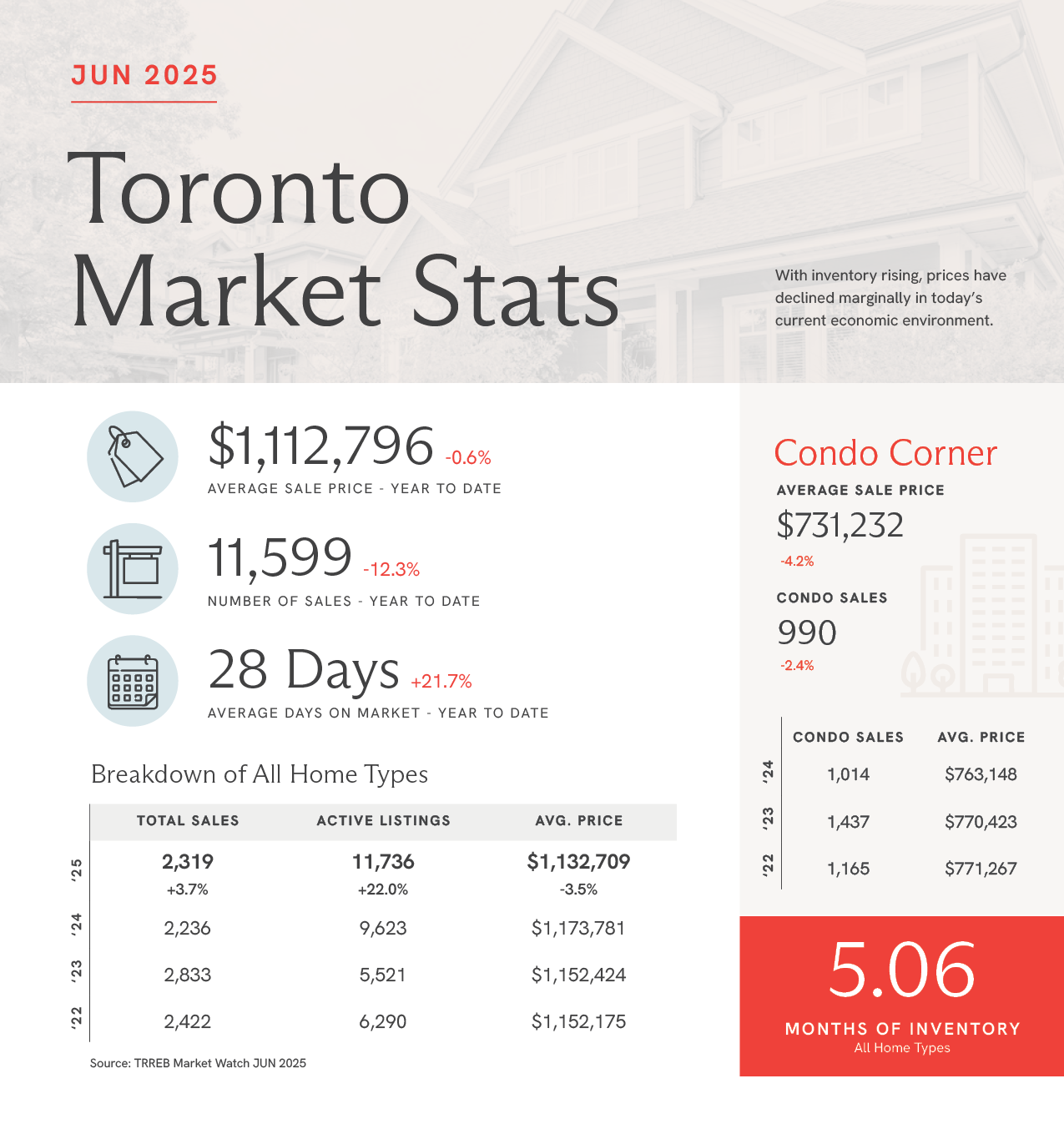
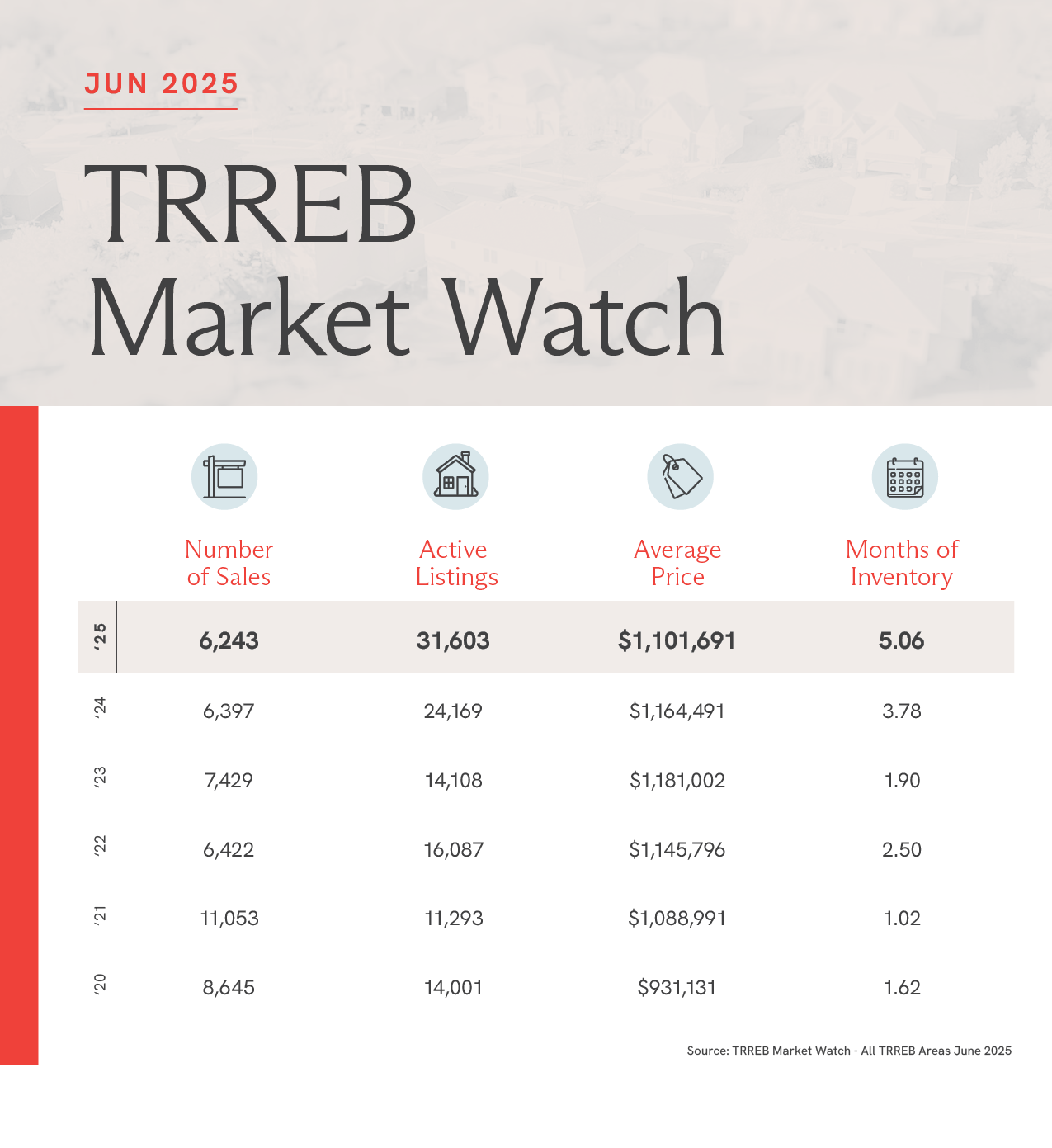
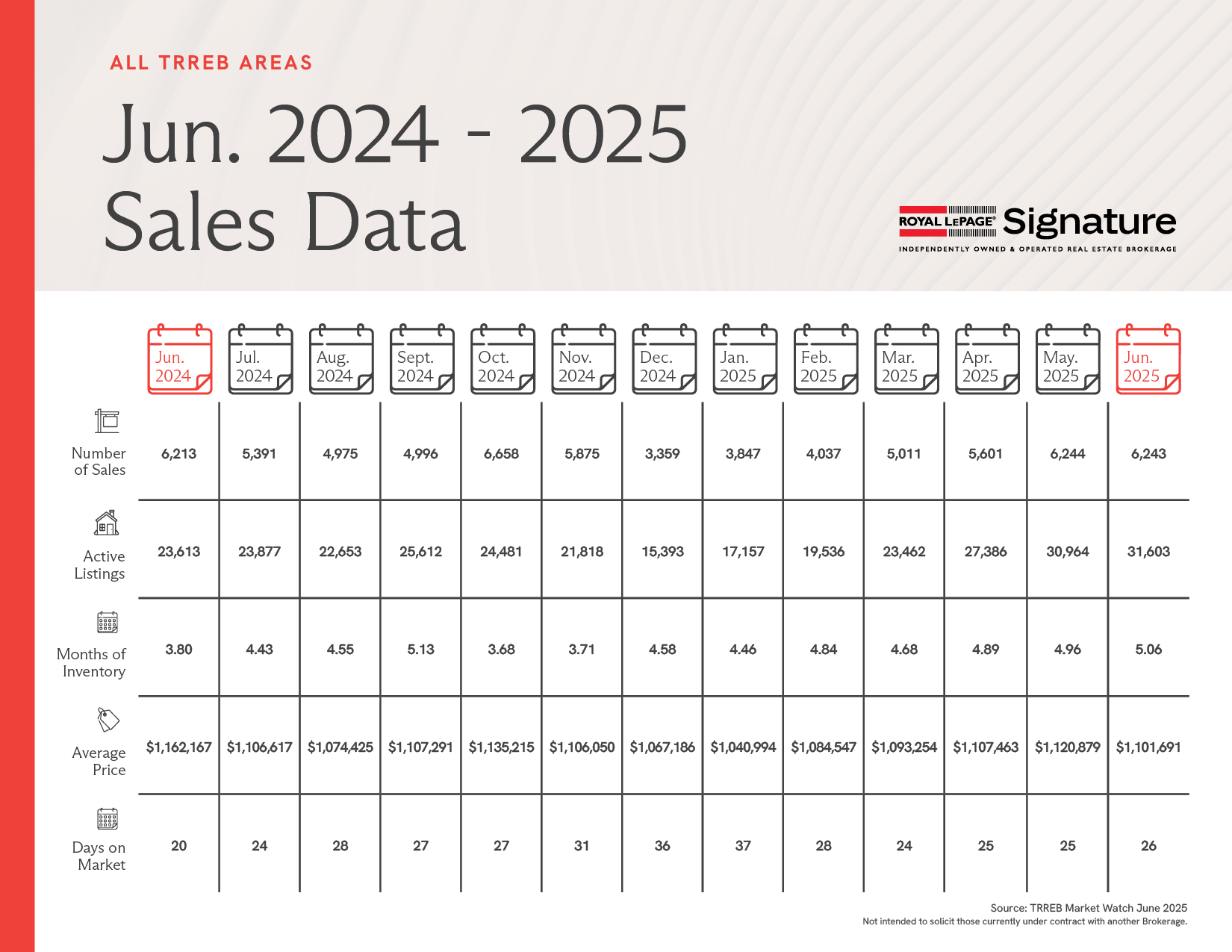
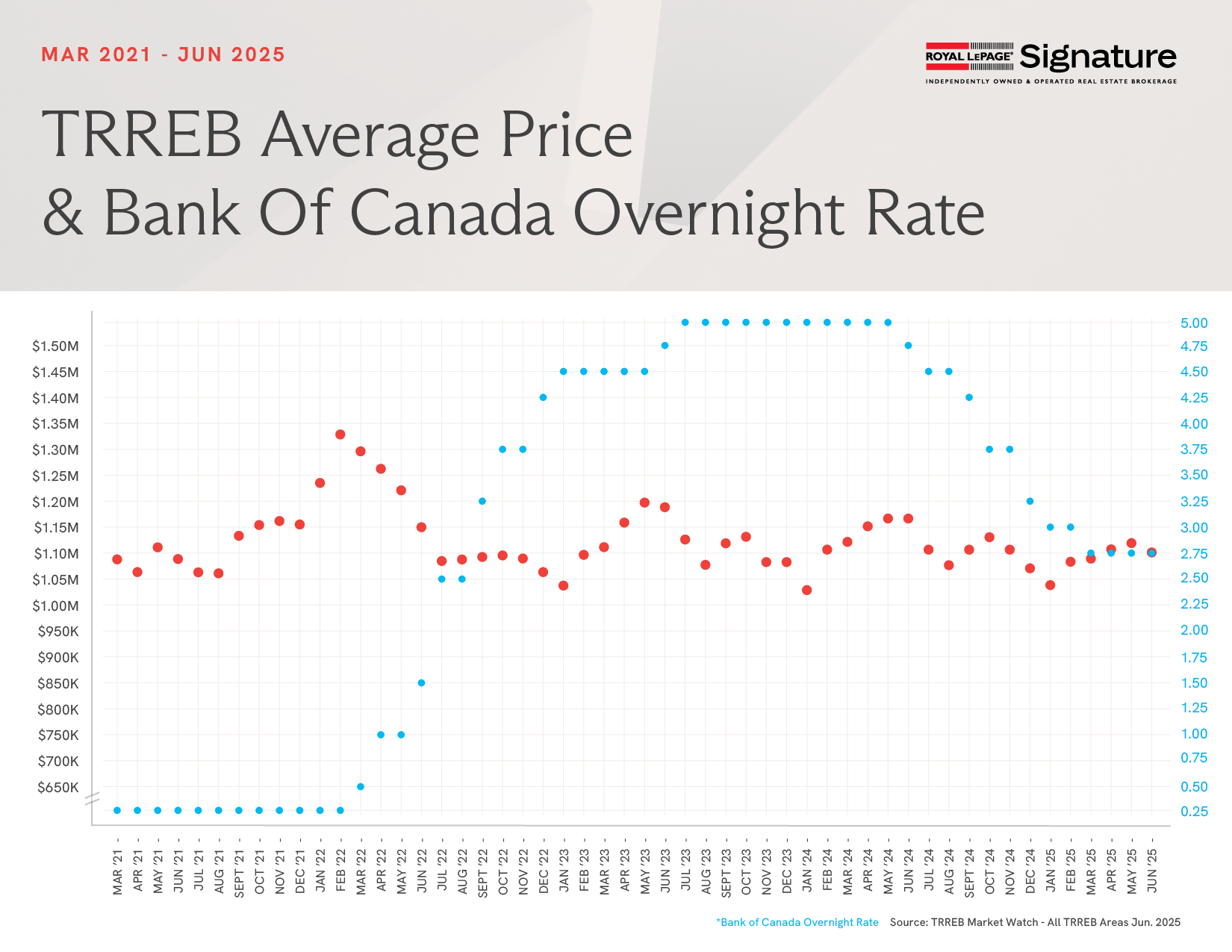
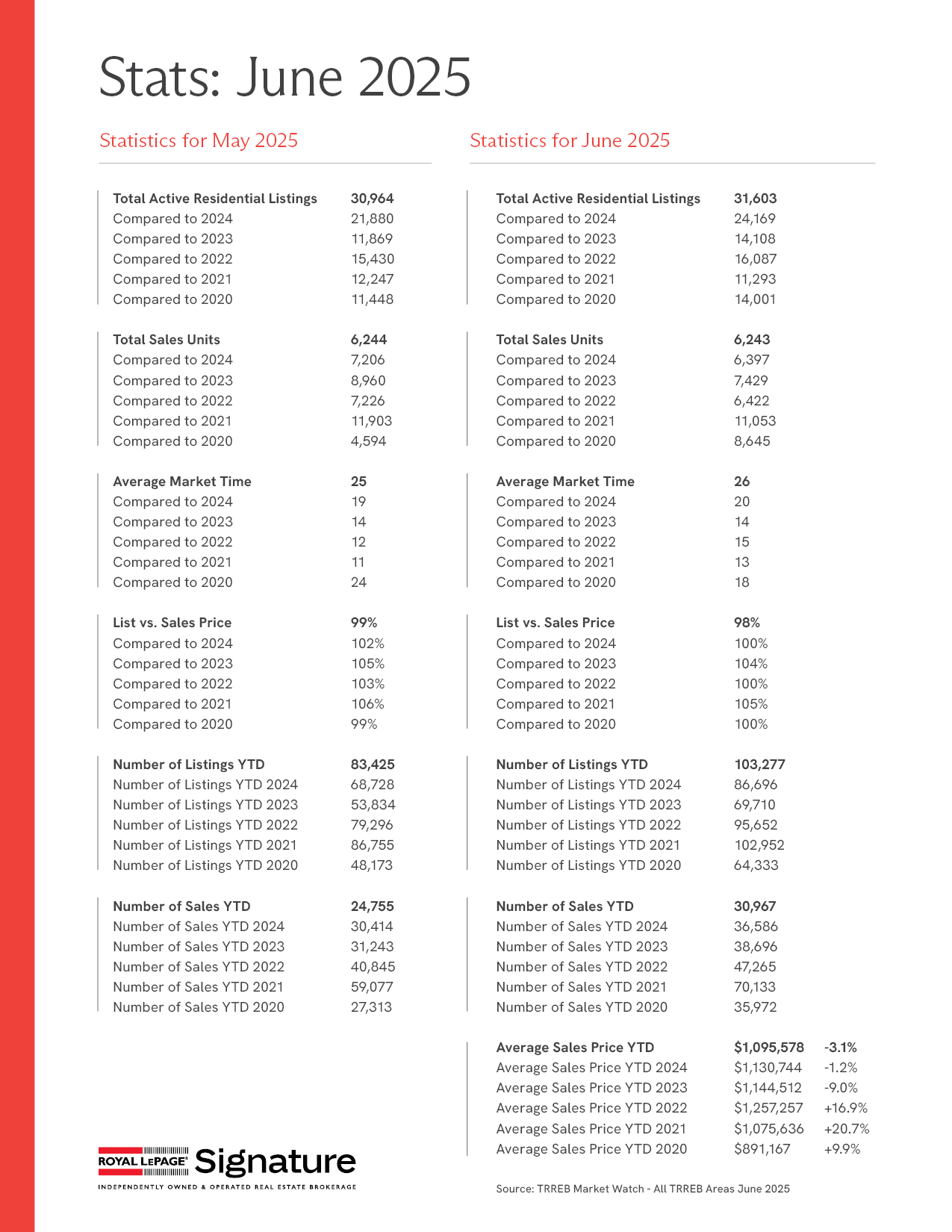
The numbers from June tell a pretty clear story: the GTA housing market is finally cooling down in a way that benefits buyers. We saw 6,243 home sales last month, which was down slightly from last year but up from May. More importantly, the average home price dropped to $1.10 million – that's 5.4% less than what people were paying this time last year.

What's really changed is that buyers aren't getting into crazy bidding wars anymore. There are more homes to choose from, and sellers are actually willing to negotiate. When you combine that with lower mortgage rates than we had in 2024, homeownership is becoming realistic again for regular families.


Pricing Trends Favour Buyers

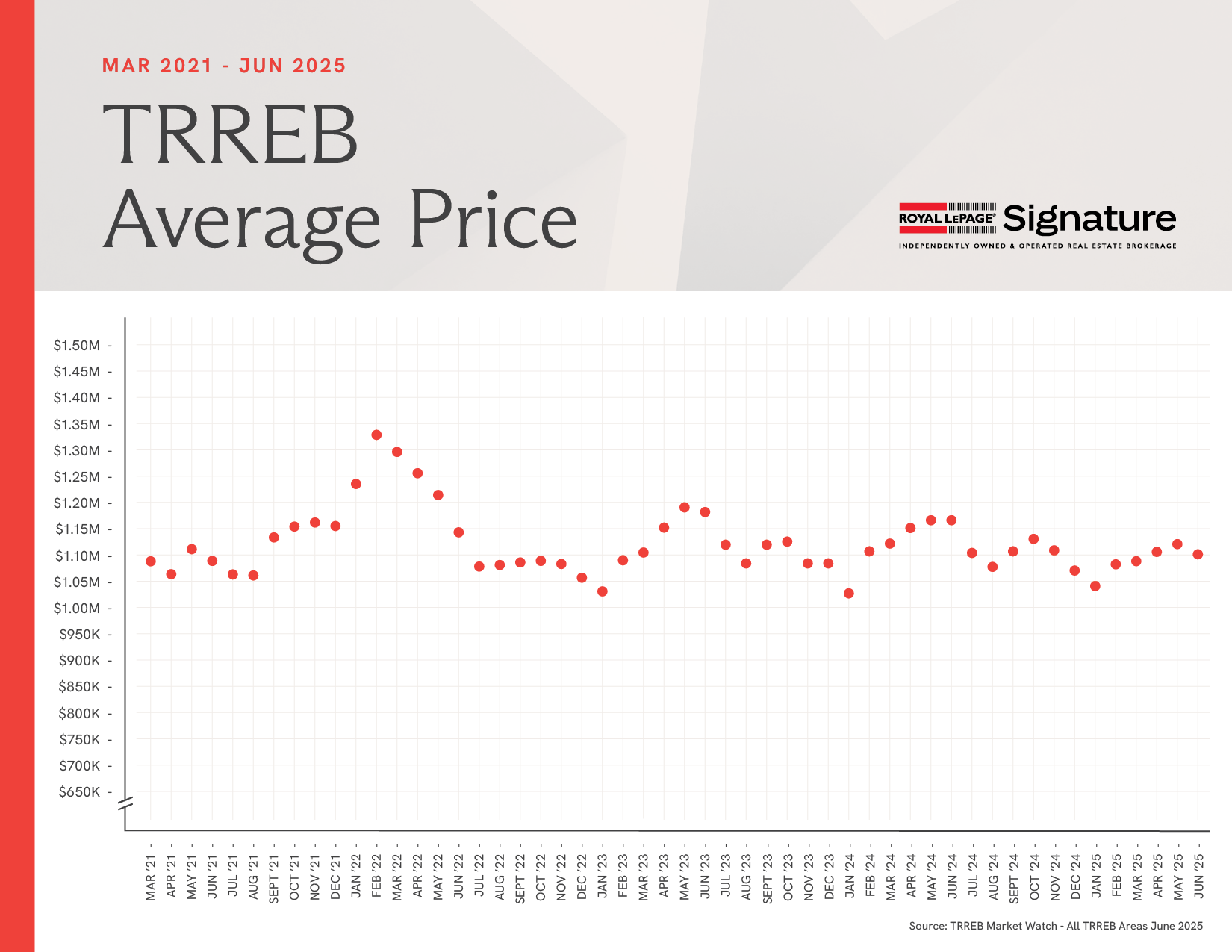
Perhaps the most significant development for prospective homeowners is the continued moderation in pricing. The average selling price for all home types in June reached $1,101,691, down 5.4% compared to June 2024. This decline, combined with borrowing costs that remain below last year's levels, represents a meaningful improvement in affordability for many households.

This pricing environment reflects a market that's finding its footing after the volatility of recent years. While sellers may need to adjust their expectations, buyers are discovering opportunities that seemed out of reach just months ago.


The Condo Market Tells Its Own Story


The condominium sector presents a particularly interesting case study in current market dynamics. Sales volumes have remained remarkably stable year-over-year, suggesting steady underlying demand. However, prices have declined 4.3% from June 2024, reflecting the ongoing impact of increased supply.

Active condo listings have surged 19% compared to last year, with inventory levels holding at approximately seven months. This abundance of choice is welcome news for condo buyers, though the continued influx of new units suggests that price pressure may persist in the near term.


Looking Ahead: What Could Drive Further Recovery


According to TRREB's Chief Market Analyst Jason Mercer, two key factors could significantly strengthen the market's momentum moving forward. First, resolving cross-border trade tensions would likely boost broader economic confidence, encouraging more buyers to enter the market. Second, additional interest rate cuts would further ease the mortgage payment burden for average GTA households.

These potential catalysts, combined with the positive trends we're already seeing, could help sustain the market's recovery and provide support for price stability in the months ahead.


What This Means for Buyers

If you've been sitting on the sidelines waiting for the "right" time to buy, you might want to pay attention to what's happening right now. This could be the shift you've been waiting for.

Here's what's working in your favour:

  • Those mortgage rates that seemed impossible last year? They're actually manageable now

  • Remember fighting tooth and nail in bidding wars? That's largely behind us

  • Sellers who used to hold all the cards are now willing to negotiate on price, closing dates, you name it

  • If you're a first-time buyer, you're not getting priced out before you even start looking

  • You can actually take your time to think about an offer without losing the house to someone else

So what should you actually do?

  • Get that pre-approval sorted before you start seriously looking (trust me, it makes a difference)

  • When you find "the one," be ready to move – good properties still don't sit around forever

  • Find an agent who gets what's happening in today's market, not someone stuck in 2022

  • Use your newfound negotiating power, but be reasonable about it

 
What This Means for Sellers

Let's be honest, selling isn't quite the slam dunk it was a couple years ago. But before you panic, know that homes are still selling, just with a different playbook.

Here's the reality check:

  • Your house probably won't sell in a weekend with multiple offers over asking (sorry!)

  • But the buyers who are looking? They're serious and they have their financing sorted

  • The days of throwing any price on the wall and seeing what sticks are over

  • You've got more competition from other sellers, but the market is starting to tighten up again

  • Quality matters more than ever – buyers have options, so make yours stand out

Your game plan for success:

  • Price it right from day one – your neighbour's sale from 2022 isn't relevant anymore

  • Make your home shine – this isn't the time to skip staging or minor repairs

  • Be open to negotiation – it's a conversation now, not a take-it-or-leave-it situation

  • Work with an agent who understands today's buyers, not yesterday's market

  • Timing still matters – a well-priced home can still create buzz and multiple offers

  • Focus on attracting buyers who are ready to buy, not just curious lookers


The Bottom Line


The GTA housing market is finding its balance, creating opportunities for both buyers and sellers who understand the current dynamics. For buyers, it's about taking advantage of improved affordability and choice. For sellers, it's about adapting to a more balanced market with realistic expectations and strong presentation.

While economic uncertainty persists and market conditions can change, the fundamentals point toward a market that's becoming more accessible and sustainable. Whether you're looking to buy or sell, the summer of 2025 may indeed represent the opportunity you've been seeking, provided you approach it with the right strategy and realistic expectations.

Read

Greater Toronto Area Real Estate Trends: What May’s Market Report Means for You

As we experienced a cool May we are finally getting a taste of summer as we get into the Month of June.  The Toronto Regional Real Estate Board's (TRREB) sales figures for May were recently released showing an improvement in affordability relative to May of last year. With sales down and listings up across the GTA, homebuyers have generally benefited from increased choice and improved affordability so far this year. However, each neighbourhood and market segment comes with its own unique dynamics and nuances.

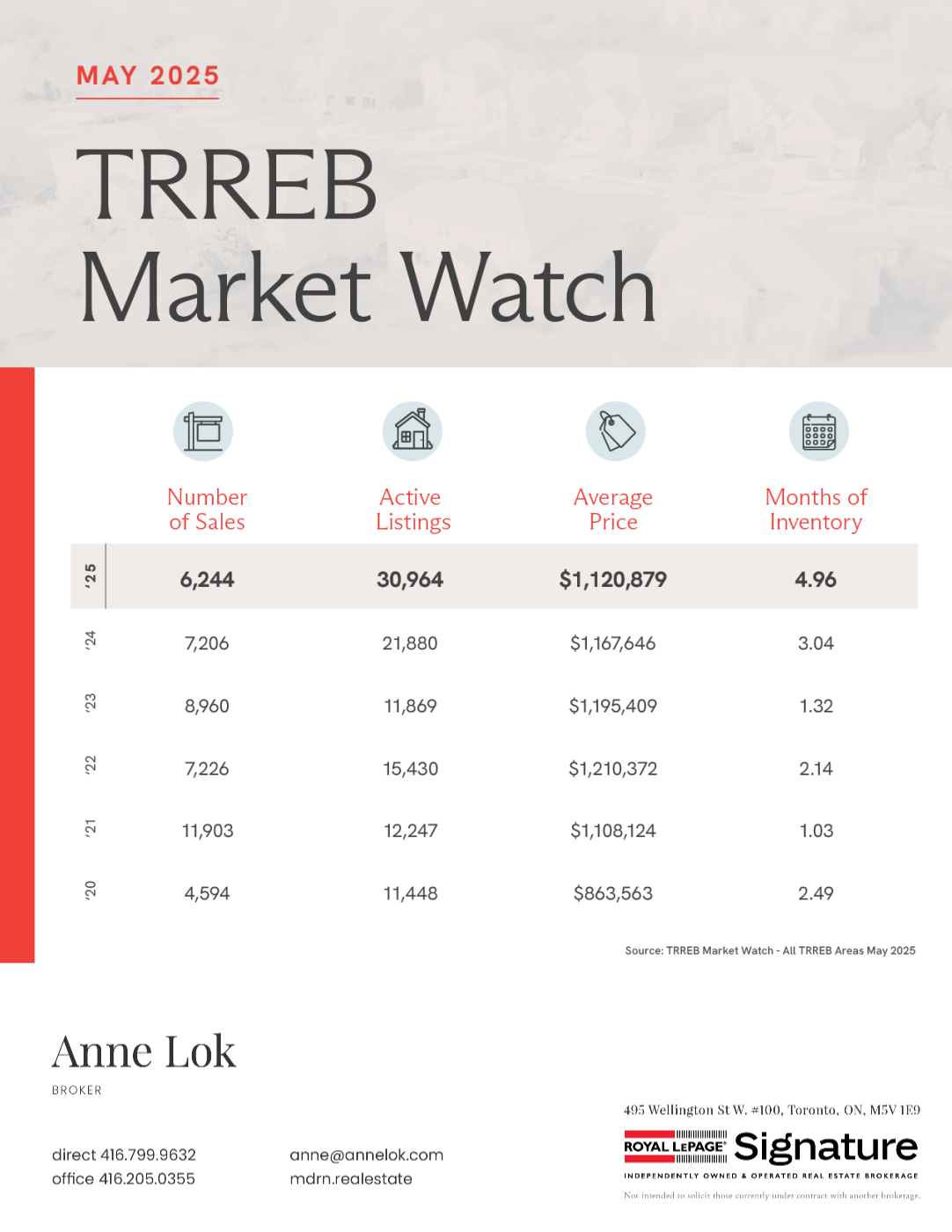
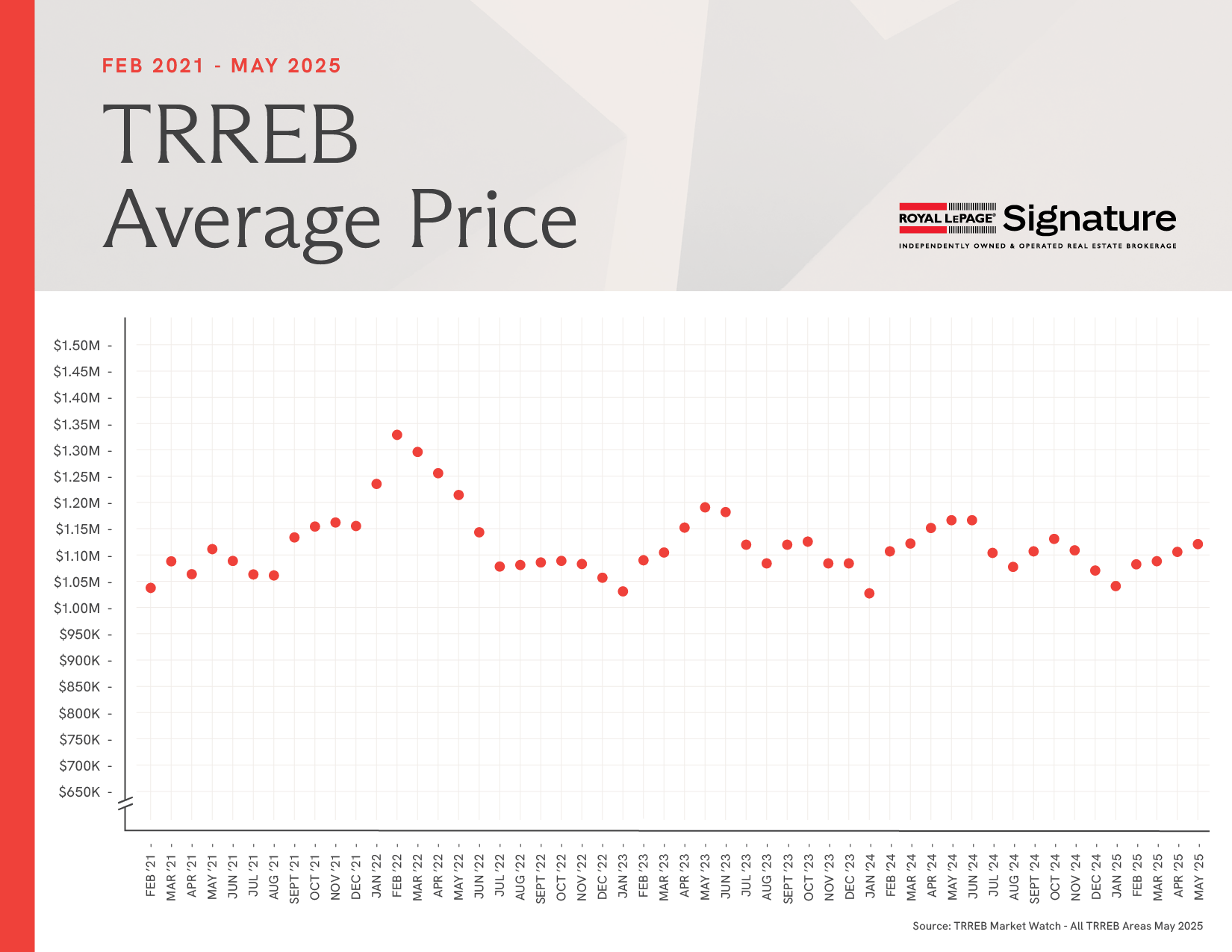
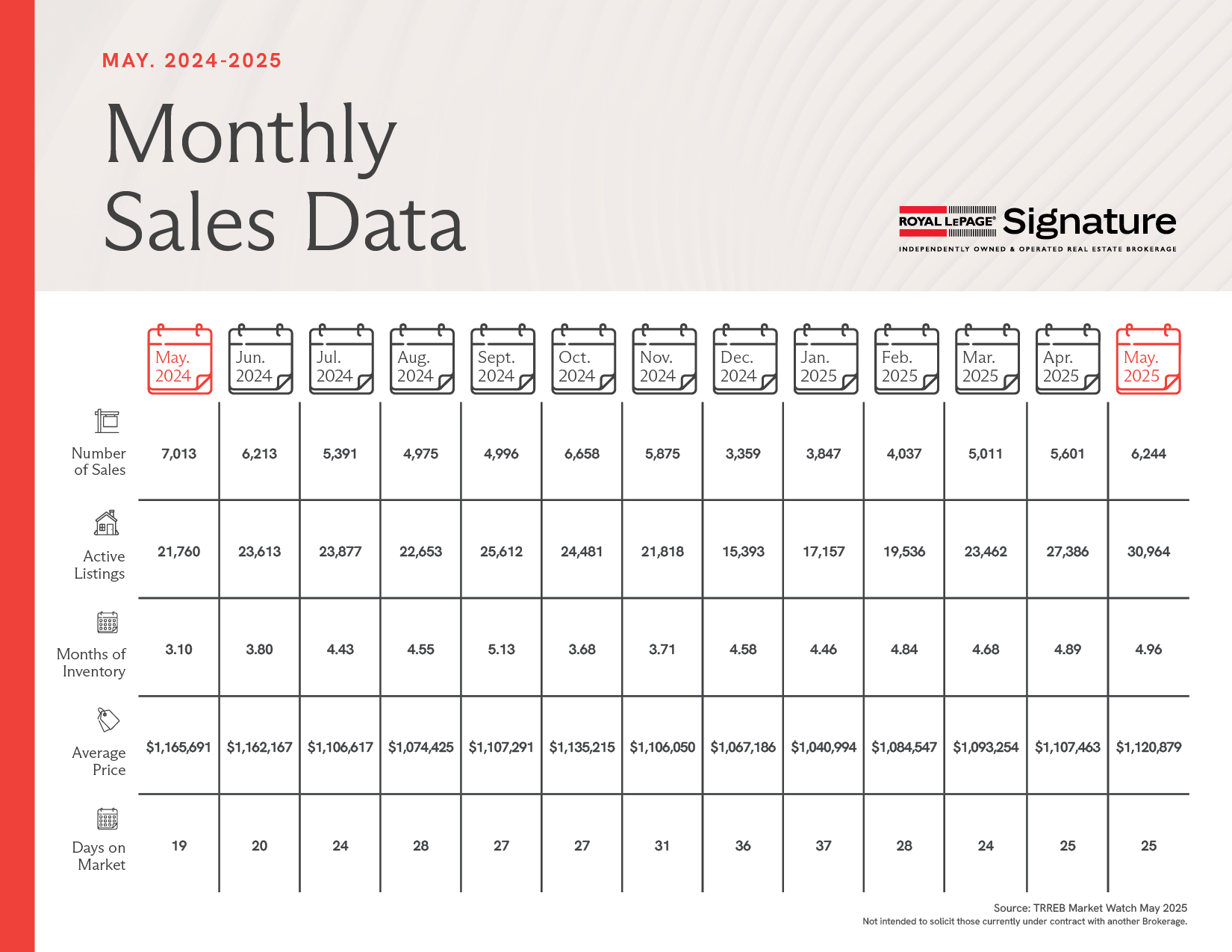
TRREB reported 6,244 home sales through the MLS System in May 2025, down by 13.3% compared to May 2024.  Home sales in May were up month-over-month compared to April 2025, this was the second monthly increase in a row. The average selling price, at $1,120,879, was down by four per cent compared to May 2024. 

TRREB’s Chief Information Officer Jason Mercer stated that home ownership costs are more affordable this year compared to last. Average selling prices are lower, and so too are borrowing costs. All else being equal, sales should be up relative to 2024. The issue is a lack of economic confidence. Once households are convinced that trade stability with the United States will be established and/or real options to mitigate our reliance on the United States exist, home sales will pick up.  

Available condominium units for sale are currently at just over seven months of inventory, offering greater affordability and more choice for first-time buyers and investors. This increased selection and improved affordability present excellent opportunities to purchase or invest in today’s condo resale market across the GTA.  

As your Realtor I welcome your enquiries, so please never hesitate to connect with me. I wish you well and I look forward to speaking with you in the coming weeks ahead. 


About Anne Lok, Broker  B. Arch, M.AAD.

Anne is a Toronto-based realtor with an architectural background, specializing in design-forward properties in historically rich neighborhoods. She offers a customized approach for each client, helping buyers find homes that blend timeless charm with modern functionality. Anne also guides sellers in showcasing the unique appeal of their properties and assists investors in identifying opportunities with strong potential for growth.

Read

942 Is Calling: Why Toronto's New Area Code Means It's Time to Invest in Property

Toronto is introducing a 942 area code. Starting this weekend, the city will expand its roster of area codes, joining the iconic 416, 647, and 437. While it might seem like a small change, this addition speaks volumes about Toronto's growth and evolution.

Growth in the City

The new area code is a direct response to the city's booming population and the increasing demand for phone numbers. Toronto has long been a magnet for newcomers, drawn by its vibrant culture, economic opportunities, and world-class amenities. As the city grows, so does the need for infrastructure to support its residents—and yes, that includes phone numbers.

Real Estate in High Demand

But what does this mean for Toronto's real estate market? Population growth often translates to heightened demand for housing. In Toronto, where the housing market is already competitive, this could lead to even higher property prices and rents. Developers may ramp up construction to meet the demand, reshaping neighbourhoods and expanding the city's boundaries. At the same time, existing communities might experience shifts in dynamics, with new residents bringing fresh energy and diversity.

Of course, growth comes with challenges. Infrastructure, from public transit to schools, will need to keep pace with the city's expansion. Affordability remains a pressing concern, as many residents struggle to find housing within their means. The new area code is a reminder that Toronto is evolving, and with that evolution comes both opportunities and hurdles.

The Opportunity to Invest

So, as Toronto welcomes the 942 area code, it's not just about dialing a new number. It's about embracing the city's growth and looking ahead to the changes that come with it. Whether you’re searching for a family home, an investment property, or even a rental opportunity, Toronto’s real estate market is brimming with potential in the long term. The city continues to expand in size, culture, and opportunity.


Looking to uncover Toronto's most exciting properties? Dive into the possibilities at www.mdrn.realestate for listings, market trends, and expert tips to guide your journey!

About Anne Lok, Broker  B. Arch, M.AAD.

Anne is a Toronto-based realtor with an architectural background, specializing in design-forward properties in historically rich neighbourhoods. She offers a customized approach for each client, helping buyers find homes that blend timeless charm with modern functionality. Anne also guides sellers in showcasing the unique appeal of their properties and assists investors in identifying opportunities with strong potential for growth.

Read

From Ordinary to Extraordinary: The Key to a Stunning Home Makeover

Your home isn't just a place to live—it's a statement, a showcase, a reflection of your taste and ambition. With the right architectural elements, even the most ordinary space can be transformed into something extraordinary. The secret? Thoughtful design, high-end finishes, and the kind of details that make buyers stop and stare.

Renovations aren’t just about adding square footage—they’re about creating a home that inspires. A well-designed property doesn’t just compete in the market; it dominates. Buyers crave stunning aesthetics, cutting-edge energy efficiency, and smart-home technology, which means investing in bold, visionary upgrades isn’t just a choice—it’s a power move.

Custom millwork cabinetry isn’t just about storage—it’s a sleek, architectural feature that integrates seamlessly into any home. Kitchens are more than places to cook; with modern design elements, they become luxury gathering spaces. Premium plumbing fixtures elevate everyday experiences, while architectural hardware brings sophistication to every door, drawer, and detail. A striking open staircase isn’t just a pathway—it’s a statement piece.

Skylights flood interiors with natural light, creating an atmosphere that feels expansive and alive. Salvaged wood adds character and sustainability, making a home feel rich with history and innovation. Smart home controls put lighting, climate, and security at your fingertips, offering convenience and high-tech appeal. High-performance windows and roofing aren’t just functional; they redefine comfort and efficiency. Thoughtfully designed lighting—from industrial pendants to sculptural chandeliers—transforms any room into a work of art. A professionally landscaped yard isn’t just curb appeal—it’s an extension of your living space, a retreat that’s as striking as it is functional.

With my real estate expertise, I offer pro bono pre-design consultations to help clients reimagine their homes and elevate their value. Whether you're looking for design inspiration or ready to connect with top architects and designers, I’ll help you unlock the potential of your space.

Exceptional architecture doesn’t just create a home—it creates an experience. Ready to craft a masterpiece? Let’s make it happen together!

About Anne Lok, Broker  B. Arch, M.AAD.

Anne is a Toronto-based realtor with an architectural background, specializing in design-forward properties in historically rich neighborhoods. She offers a customized approach for each client, helping buyers find homes that blend timeless charm with modern functionality. Anne also guides sellers in showcasing the unique appeal of their properties and assists investors in identifying opportunities with strong potential for growth.


Read

Navigating Market Uncertainty: 2025 Q1 Quarterly Resale Condo Update

2025 Q1 Quarterly Resale Condo Update

In a snapshot:

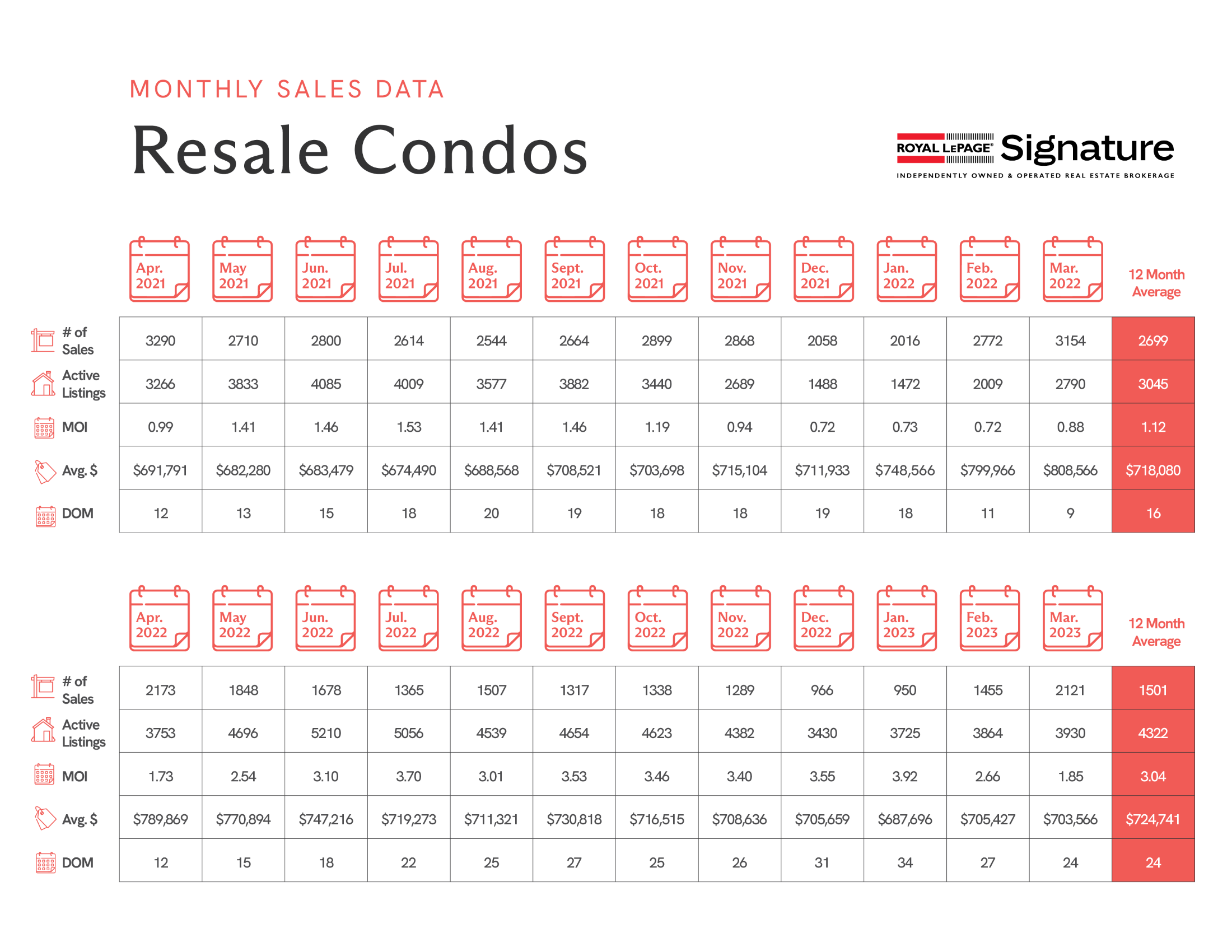
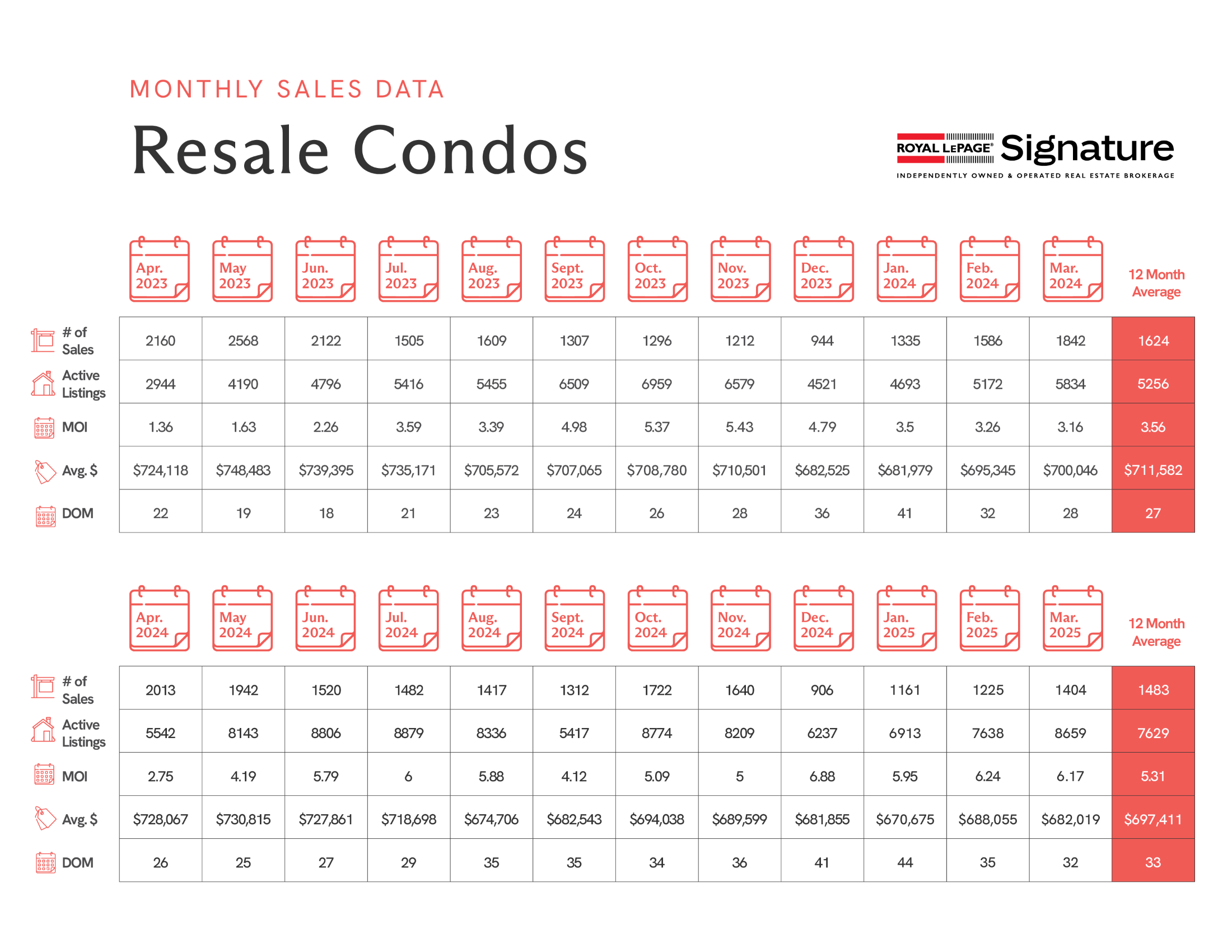
  • The GTA condo resale market continued to soften in March

  • The GTA condo rental market showed signs of stability in March, as demand kept pace with supply and average rents held steady from February. On a year-over-year basis, average rents declined 4.2%. Even so, rents remained 10.4% higher than they were five years ago at the onset of the pandemic in March 2020.

  • With the steady flow of new condo units reaching completion, we can expect continued pressure on prices in the resale market due to rising inventory levels. 

  • For Investors, it's encouraging to see signs of stability in the rental market, with demand keeping pace with supply and average rents beginning to level out.

  • For Buyers, the resale condo market are offering more options and declining prices. Prices are down compared to last year but still higher than in 2020, offering a chance to find better deals. Rising inventory levels might push values down further, so it could be a strategic time to negotiate and explore options.

  • For Sellers who are thinking of selling, you will need to price competitively and focus on showcasing unique features to attract buyers in this crowded market.
  • For Move-Up Buyers who are looking to upgrade to a bigger or more luxurious unit, this could be a strategic time to act. While your current property may sell for less than peak prices, the declining market means you’re likely to secure a better deal on your next purchase. With more inventory and falling prices, there are plenty of options to explore for your move-up needs.


If you'd like deeper insights, I can create a custom report for your micromarket to provide specific trends and recommendations based on your situation. Let me know if you’re interested!


About Anne Lok, Broker  B. Arch, M.AAD.

Anne is a Toronto-based realtor with an architectural background, specializing in design-forward properties in historically rich neighbourhoods. She offers a customized approach for each client, helping buyers find homes that blend timeless charm with modern functionality. Anne also guides sellers in showcasing the unique appeal of their properties and assists investors in identifying opportunities with strong potential for growth.


Read

This Luxury One Bedroom Condo Just Listed For Lease at 50 Charles St East

2206 50 Charles Street E at luxury CASA 3 has just been listed. See property details here

Located in the heart of Toronto's vibrant Church-Yonge Corridor, 50 Charles St East offers unparalleled access to one of the city's most dynamic neighborhoods. This area is renowned for its eclectic mix of upscale dining options, chic boutiques, and a lively arts scene. Residents benefit from proximity to cultural landmarks like the Royal Ontario Museum and Yorkville's shopping district, as well as easy access to major transit hubs, including the Bloor-Yonge subway station. Nestled amidst a perfect blend of urban excitement and serene green spaces, the Church-Yonge Corridor promises a lifestyle rich in convenience and charm, making it a sought-after destination for professionals, U of T/ Ryerson students, and families alike.

50 Charles St E #2206

Luxury 5 star condo living at Casa 3. Walking distance to Yorkville, Eataly, top restaurants and shopping, UofT St George campus, Yonge and Bloor-Danforth subway lines, and all conveniences.

50 Charles St E #2206

Just steps to both Yonge/Bloor subway line, shopping and area amenities, luxury retails, Eateries, and 5-star restaurants! Hermes designer lobby, state of the art amenities including fully equipped gym, business wi-fi, rock climbing wall, lounge with amazing outdoor pool, sauna, hot tub & party/meeting rooms, roof terrace lounge with BBQ.

50 Charles St E #2206

Clean, well-maintained, bright 1 bedroom unit with quality finishes, lots of light, and large balcony.

Schedule an appointment to view this property

Read

Slash Your Energy Bills! The Ultimate Home Upgrade Guide

There is no better time to make your home more energy efficient with thousands of dollars in government rebates and incentives. If you’re a homebuyer or homeowner in Ontario looking to go green, there are currently some fantastic incentives to help you save on your energy bill, as well as make your home more environmentally friendly in the long term.

  • Canada Greener Homes Grant

    You could qualify for up to $5,000 to put toward eco-friendly upgrades like better insulation, energy-efficient windows, doors, heat pumps, and renewable energy systems. CGHG will cover up to $600 for those pre- and post-retrofit Energuide evaluations.

  • Canada Greener Homes Loan (CGHL) program offers homeowners who are looking to do a more ambitious project interest-free loans up to $40,000 to complete energy-efficient upgrades (eg. air sealing, basement flooding protection, green roofs, insulation, and installing solar panels). 

  • Home Efficiency Rebate Plus (HER+) is a collaboration between Enbridge Gas and Natural Resources Canada. It offers rebates up to $10,000 for things like insulation and renewable energy systems. If you are a homeowner with a detached, semi-detached, row/townhome or mobile home, you will need to complete two eligible upgrades with a pre- and post- energy assessment to qualify. HER+ is co-delivered with CGHC. You can combine both benefits from both programs for bundled savings to lower your energy bill with a more comfortable home.

  • City of Toronto Eco-Roof Incentive Program is designed to encourage the installation of green roofs and cool roofs on buildings across the city. The payout ranges from $2 to $100 per square meter, depending on the type of roof. Green roofs can support vegetation growth and help with stormwater management, air purification, reduce heat absorption and provide habitat for urban wild life. The program is open to all existing residential, industrial, commercial, and institutional buildings in Toronto. However, you must apply and get approval before starting any work.

  • Home Winterproofing Program is a fantastic initiative between Enbridge Gas and Save on Energy in Ontario, aiming to lower energy bills, reduce greenhouse gas emissions, and enhance home comfort to help low-income households improve their home's energy efficiency at no cost. Eligible participants can receive energy-efficient upgrades like better insulation and draft-proofing, and even throws in smart thermostats—for free. You can find out more on Enbridge website.

These key programs can help you save on costs while making your home more sustainable.


Looking for a home that speaks to your style as much as it meets your needs? 

Anne Lok is a Toronto-based real estate broker with a passion for design-forward homes and creating personalized experiences for her clients. With a sharp eye for detail and a deep understanding of the city’s unique neighbourhoods, Anne helps her clients find spaces that inspire to perfectly align with their style, needs, and goals. Whether you’re buying, selling, or just exploring your options, let’s create something extraordinary together.

Book a buyer or seller consultation  

Read

SOLD - 609 30 Allanhurst Drive in Toronto

609 30 Allanhurst Drive in Toronto on Mar 6, 2025. See details here

Spacious 2 bedroom co-op living in the sought-after Edenbridge-Humber Valley neighborhood. This spacious top floor unit offers an open-concept layout with breath-taking views of Humber Valley from your balcony. The freshly painted interiors feature newer baseboards (2024), crown mouldings and potlights throughout. The parquet floor is in great condition. Primary bedroom with built-in murphy bed system has large walk-in closet. Meticulously maintained grounds and amenities in a quiet building. This home is perfect for anyone looking for value and comfort. Walking distance to parks. Direct transit to Jane subway, future Eglinton/ Scarlett LRT Station. Property taxes are included in maintenance fees. No rentals allowed in the building. Restricted pet rule (no dogs).

Interested in co-op living? Browse homes here .


About Anne Lok, Broker  B. Arch, M.AAD.

Anne is a Toronto-based realtor with an architectural background, specializing in design-forward properties in historically rich neighborhoods. She offers a customized approach for each client, helping buyers find homes that blend timeless charm with modern functionality. Anne also guides sellers in showcasing the unique appeal of their properties and assists investors in identifying opportunities with strong potential for growth.

Read

Skyline Shake-Up! How Mid-Rise Buildings Are Taking Over Toronto!

In a move that could significantly reshape Toronto's urban landscape, a new policy for as-of-right zoning for mid-rise buildings is slated for discussion at an upcoming City Council meeting. If given the green light, this policy would permit buildings up to 11 storeys on designated Avenues, a significant step towards alleviating the city's ongoing housing crisis.

Toronto's Skyline Transformation: Mid-Rise Buildings to Rise Along Busy Streets

In a move that could significantly reshape Toronto's urban landscape, a new policy for as-of-right zoning for mid-rise buildings is slated for discussion at an upcoming City Council meeting. If given the green light, this policy would permit buildings up to 11 storeys on designated Avenues, a significant step towards alleviating the city's ongoing housing crisis.

Addressing the Housing Shortage

Toronto has been grappling with a housing shortage for years, and this proposal aims to be a game-changer. The new zoning permissions are designed to encourage mid-rise development, which could add over 61,000 housing units, a stark contrast to the current standards. This shift is part of the city's broader strategy to create more housing options and foster a more inclusive and livable urban environment.

Urban Design Performance Standards

To ensure that these new developments contribute positively to Toronto's urban fabric, the proposal includes stringent urban design performance standards. These standards will guide the aesthetic and functional aspects of the new buildings, ensuring they blend seamlessly with existing neighborhoods while enhancing the city's architectural diversity.

New Avenues on the Horizon

One of the most ambitious aspects of the proposal is the potential introduction of new Avenues across 120 kilometers of Toronto's urban grid. These new corridors would not only accommodate the mid-rise buildings but also transform the city's busiest streets into vibrant, mixed-use areas that support both residential and commercial activities.

A Vision for a Modern Toronto and which streets will be impacted?

This policy represents a forward-thinking vision for Toronto, one that embraces density and vertical growth while maintaining a commitment to urban design excellence. As the City Council prepares to debate this proposal, many residents and stakeholders are hopeful that it will pave the way for a more sustainable and dynamic urban future.

The new policy will affect major streets and avenues such as Danforth Ave, Bloor St, King St and Queen St, among other transit friendly corridors.

Stay tuned for updates on this transformative policy and its potential impact on Toronto's housing landscape.

About Anne Lok, Broker  B. Arch, M.AAD.

Anne is a Toronto-based realtor with an architectural background, specializing in design-forward properties in historically rich neighbourhoods. She offers a customized approach for each client, helping buyers find homes that blend timeless charm with modern functionality. Anne also guides sellers in showcasing the unique appeal of their properties and assists investors in identifying opportunities with strong potential for growth.


Read

Condo Nightmares: Units to Avoid Like the Plague!

When purchasing a Toronto condo, it’s essential to consider not only the amenities and location but also potential drawbacks. Here are some condo units you should think twice about before making a decision whether buying preconstruction or resale condos.

When navigating the pros and cons of condo units, there’s more to consider than just the view from your balcony. Let’s delve into the advantages and drawbacks of condo living in this vibrant city.


Units Next to the Elevator or Garbage Chute

These units can be noisy due to constant foot traffic or the sound of the chute door opening and closing. Plus, the proximity to the elevator might mean less privacy.

Units Above a Loading Dock or Garage Entrance

Noise pollution from delivery trucks, car engines, and people coming and going can disrupt your peace and quiet. Additionally, exhaust fumes may seep into your unit.

Units Above the Garbage Room or Garage Ramp

The smell from garbage disposal areas can permeate into nearby units. Living above the garage ramp might also mean headlights shining into your windows at night.

Top Floor Units Beneath the Party Room

While top-floor units often offer great views, be cautious if the party room is directly above. Late-night gatherings or footsteps can disturb your tranquility.

Units Below the Gym

Gyms can be noisy places, especially during peak hours. The sound of weights dropping or treadmills running can be bothersome if your unit is directly below.

Units located on the top floor

High floor condo units can be vulnerable to roof leaks, water drainage problems from pooling, and potential structural damage from the roof membrane as the condo ages. Penthouse units can face its own unique challenges. during torrential rain.

Check for Pigeon Populations

Pigeons can create a mess on balconies and windowsills. If you notice a large pigeon population around the building, it might be a nuisance.

Living Windows That Don’t Open

Some modern buildings have fixed windows that don’t open. While they provide natural light, consider the lack of ventilation. Also, if another building goes up nearby, fire codes may restrict operable windows.

Units Near the Pool or Common Areas

While being close to amenities like the pool or common room might seem convenient, it can also mean noise from gatherings, children playing, or maintenance activities.

Units Facing Busy Streets or Highways

Units with windows directly facing busy streets or highways can be noisy due to traffic, sirens, and streetlights. Consider the impact on your sleep quality and overall comfort.

Units with Structural Flaws

Be cautious of units with visible structural issues, such as cracks in walls, sagging ceilings, or uneven floors. These could indicate underlying problems.

Units with Poor Natural Lighting

Dark or poorly lit units can feel gloomy and affect your mood. Consider the orientation of the unit and the availability of natural light.

Units with Limited Storage Space

Insufficient storage can lead to clutter and frustration. Check if the unit has enough closet space or additional storage options.

Units with Inadequate Ventilation

Proper ventilation is essential for comfort and health. Avoid units with small or poorly placed windows that restrict airflow.

Remember, thorough research and a visit to the condo complex are crucial before making any decisions. So, whether you’re eyeing preconstruction or resale condos, weigh the pros and cons carefully before making your decision. Happy house hunting!

About Anne Lok, Broker  B. Arch, M.AAD.

Anne is a Toronto-based realtor with an architectural background, specializing in design-forward properties in historically rich neighbourhoods. She offers a customized approach for each client, helping buyers find homes that blend timeless charm with modern functionality. Anne also guides sellers in showcasing the unique appeal of their properties and assists investors in identifying opportunities with strong potential for growth.

Read
This website may only be used by consumers that have a bona fide interest in the purchase, sale, or lease of real estate of the type being offered via the website. The data relating to real estate on this website comes in part from the MLS® Reciprocity program of the PropTx MLS®. The data is deemed reliable but is not guaranteed to be accurate.