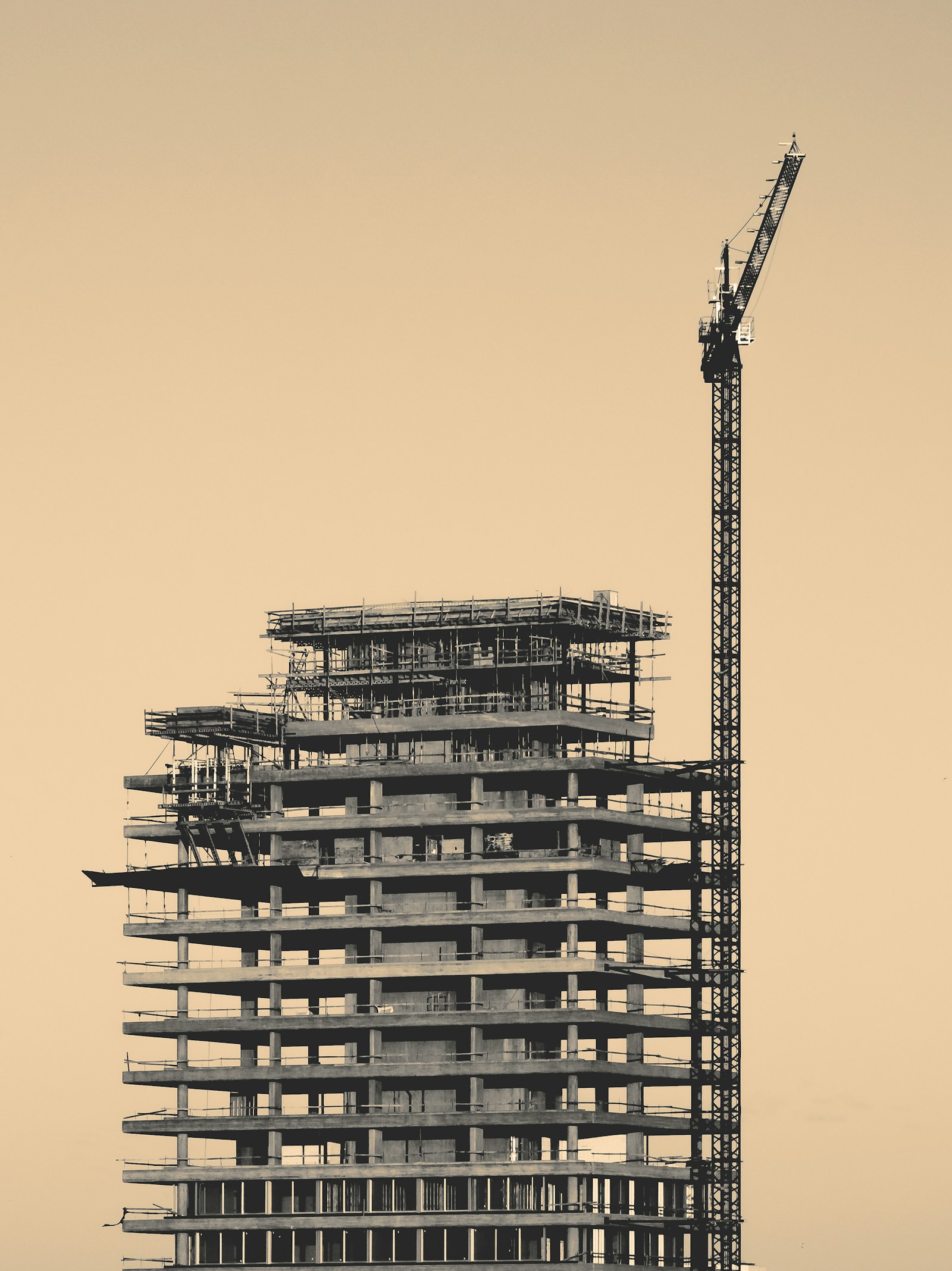
If you've been searching for a new condo in Toronto lately, you've probably noticed something: there just aren't as many options as there used to be. Fewer cranes dotting the skyline, fewer pre-construction launches, and a growing sense that the city's housing pipeline is grinding to a halt. And if you're wondering why, the answer isn't what you might think.
It's not that developers don't want to build. It's that increasingly, they simply can't make the numbers work.
The Perfect Storm Squeezing Builders
Picture this: You're a developer who wants to build a new condo tower. You've got the land, you've got the vision, and you know there are thousands of people desperate to buy. But here's the problem—the cost of actually building that tower has skyrocketed.
Construction costs have surged dramatically over the past few years. Materials cost more. Labor costs more. Everything from concrete to elevator systems has gotten more expensive. In a normal market, you'd pass some of these costs onto buyers through higher prices. But there's a ceiling to what people can afford, especially when mortgage rates remain elevated and affordability is already stretched to the limit.
The Municipal Fee Mountain
Then there's the other half of the squeeze: development charges. These are the fees that the City of Toronto charges developers to help pay for the infrastructure needed to support new development—things like roads, transit, water systems, and community facilities.
These charges have remained stubbornly high, even as the market has shifted. For a typical condo unit, development charges can add tens of thousands of dollars to the cost. When you combine elevated construction costs with these municipal fees, many projects simply don't pencil out anymore. Developers run their financial models and realize they'd be losing money on every unit sold.
So what happens? Projects get shelved. Land sits vacant. And the housing supply that Toronto desperately needs never materializes.
The Ripple Effect Nobody Talks About
Here's what makes this crisis even more urgent: when the condo market stalls, it doesn't just hurt condo buyers. It impacts the entire housing ecosystem, including freehold homes.
Think of the housing market as a ladder. Condos are typically the entry point—the first rung that helps young professionals, new families, and immigrants get into the market. When people can buy condos, they build equity, and eventually, many of them move up to townhouses and detached homes. This creates a natural flow where existing homeowners sell to move up, opening up supply at every level.
But when condo construction slows, that ladder breaks. First-time buyers can't get on the first rung. They stay as renters longer, which drives up rental prices. Those who would have bought condos and later traded up stay put, meaning fewer freehold homes come onto the market. The whole system gets congested.
In other words, a healthy condo supply isn't just good for condo buyers—it's essential for maintaining a functional freehold market too. When condos aren't being built, everyone feels the squeeze.
The Numbers Tell a Stark Story
The latest data from Urbanation paints an even more sobering picture than anyone imagined. If you thought 2024 was bad, Q1 2025 shows a market in virtual collapse:
Q1 2025 brought historic lows:
Just 533 new condo sales in the entire GTHA—a 62% drop from last year and 88% below the 10-year average
Only 215 sales in Toronto proper—the lowest level since 1990
A mere 497 units started construction, plummeting 79% year-over-year and 88% below the 10-year average—the lowest quarterly total since 1996
Only two projects launched for pre-sales in the entire quarter, totaling just 275 units
To put this in perspective: in 2024, annual sales totaled 4,590 units. In Q1 2025 alone, we're tracking at a pace that would result in barely 2,100 sales for the entire year—less than half of last year's already dismal performance.
The inventory crisis deepens: Unsold inventory now sits at 23,918 units, equal to 78 months of supply—that's more than six years' worth at current sales rates. Even more troubling, the number of completed but unsold units has more than doubled compared to a year ago, reaching its highest level since Q1 1993.
Projects are being abandoned: Since the beginning of 2024, 28 pre-sale projects totaling 5,734 units have been either put on hold, cancelled, placed in receivership, or converted to purpose-built rental—including four projects totaling 1,042 units in Q1 2025 alone.
Meanwhile, a wave of completions from the pandemic-era boom continues to flood the market. Completions are projected to total 31,396 units in 2025, before dropping sharply to an estimated 17,487 units in 2026 as the construction pipeline runs dry.
The Price Floor Problem
You might be thinking: "Why don't developers just lower their prices?" It's a fair question, but here's the reality—they can't.
When your hard costs—the actual expense of construction—are fixed at high levels, and when municipal charges add tens of thousands more per unit, there's a floor below which prices simply cannot go without builders losing money. And unlike many industries, developers can't just absorb the loss. These projects require years of planning, massive capital investment, and construction financing that demands a certain level of pre-sales before a shovel even hits the ground.
The result? Prices have dropped only about 5% from their peak, even as the market has collapsed. Not because developers are being stubborn, but because the economics literally don't work at lower price points. Meanwhile, resale condo prices have fallen 12-13%, creating a gap that makes it nearly impossible for new construction to compete.
A Path Forward: Collaboration Over Confrontation
Here's the hard truth: we can't solve this crisis by pointing fingers. Neither developers nor municipalities are solely to blame—but both need to be part of the solution.
What would meaningful collaboration look like?
Flexible development charges tied to market conditions. When the market is hot and projects pencil out easily, higher charges make sense. But when the market freezes, municipalities need mechanisms to adjust charges downward temporarily to keep supply flowing. This doesn't mean eliminating these fees—it means being smart and adaptive about when and how they're applied.
Streamlined approvals for projects that meet density and affordability targets. Time is money in development. Every month of delay adds carrying costs that ultimately get baked into prices. If we want more housing built faster, we need approval processes that reward good projects with speed and certainty.
Shared risk models for affordable housing components. What if municipalities and developers could partner on mixed-income projects, where the public sector takes on some risk in exchange for guaranteed affordable units? Creative partnerships like this could unlock projects that are currently frozen.
Honest conversations about infrastructure funding. Development charges exist for a reason—cities need to fund the infrastructure that supports growth. But if those charges are so high they prevent any growth from happening, then we're not funding infrastructure—we're preventing it from ever being needed in the first place. There has to be a middle ground where growth pays for itself without killing the projects that create that growth.
The Stakes Couldn't Be Higher
This isn't just about condos. It's about whether young families can afford to live in this city. It's about whether businesses can attract talent when housing is unaffordable. It's about whether Toronto remains a place of opportunity or becomes a playground exclusively for the wealthy.
The construction starts we're seeing today—or rather, not seeing—will determine the housing supply we have in 2026, 2027, and beyond. With starts at a 20-year low and projects being cancelled or shelved, we're setting ourselves up for an even worse housing shortage down the line.
The good news? This is fixable. We have smart people working in municipal planning departments and in development companies across the region. What we need is for them to sit down together, acknowledge the economic realities on both sides, and find creative solutions that work for everyone.
Because right now, the status quo isn't working for anyone—not for first-time buyers watching homeownership slip away, not for renters facing climbing costs, not for existing homeowners who can't find someone to buy their condo so they can move up, and not for developers sitting on land they can't profitably develop.
The condo market isn't just a luxury amenity for a city. It's a critical piece of housing infrastructure that keeps the entire system functioning. When it breaks down, everyone feels the pain.
It's time for a new approach—one built on partnership, flexibility, and a shared commitment to keeping Toronto livable and affordable for the next generation.

About Anne Lok, Broker B. Arch, M.AAD.
Anne is a Toronto-based realtor with an architectural background, specializing in design-forward properties in historically rich neighbourhoods. She offers a customized approach for each client, helping buyers find homes that blend timeless charm with modern functionality. Anne also guides sellers in showcasing the unique appeal of their properties and assists investors in identifying opportunities with strong potential for growth.

Comments:
Post Your Comment: