RSS

GTA Housing Market 2025 Recap & 2026 Outlook: A Year of Adjustment Sets the Stage for Recovery

Happy New Year! I hope everyone had a fabulous holiday season as we enter into 2026. As we reflect on the past year and look ahead, there's much to discuss about the Greater Toronto Area housing market and what lies ahead for homebuyers, sellers, and investors alike.

2025: A Year of Improved Affordability

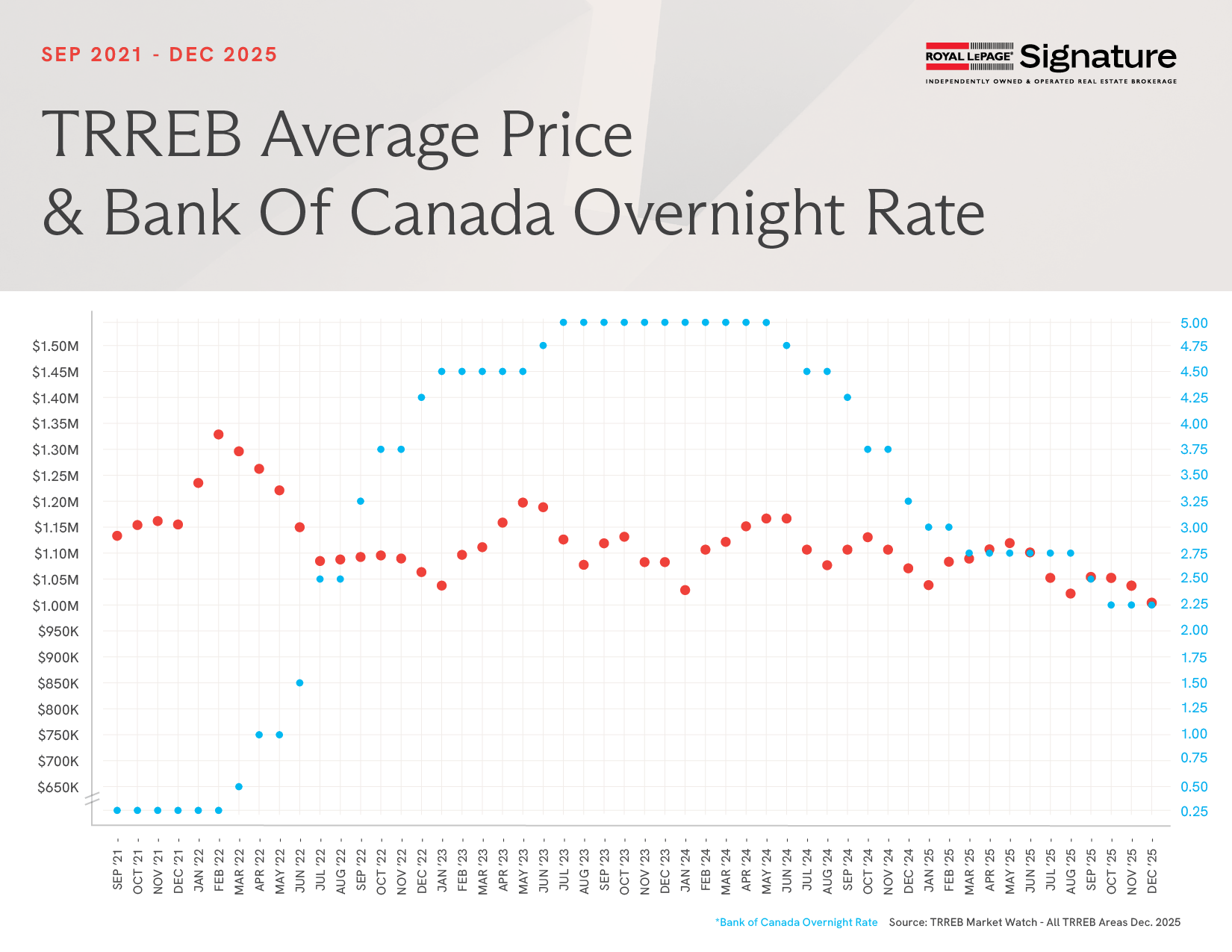
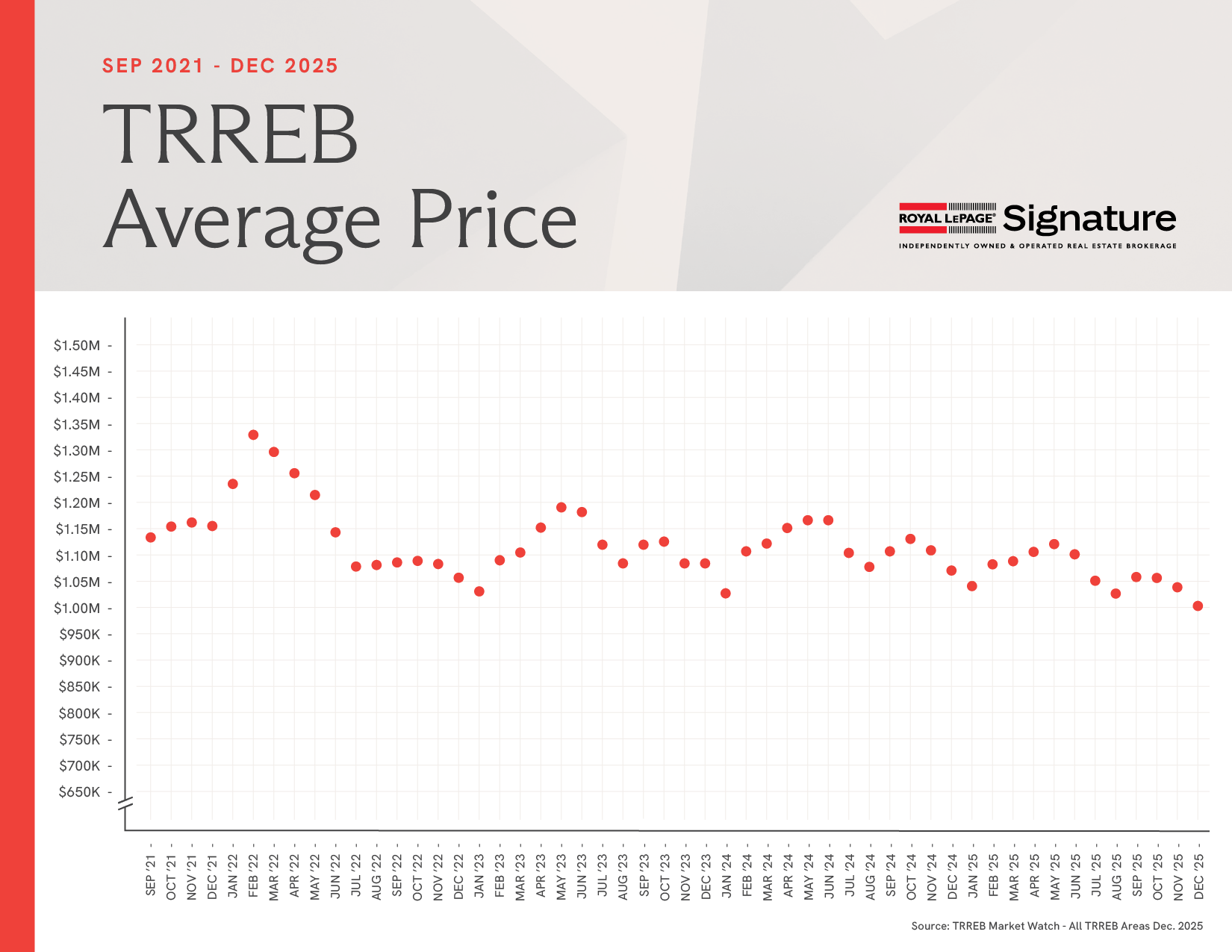
In 2025, the GTA housing market became more affordable as both home prices and mortgage rates trended lower. This improvement in affordability has positioned the market for a recovery that many industry experts believe will gain momentum throughout 2026. As households gain confidence that the economy and labour market are on solid footing, sales activity is expected to pick up.

The Numbers Tell the Story

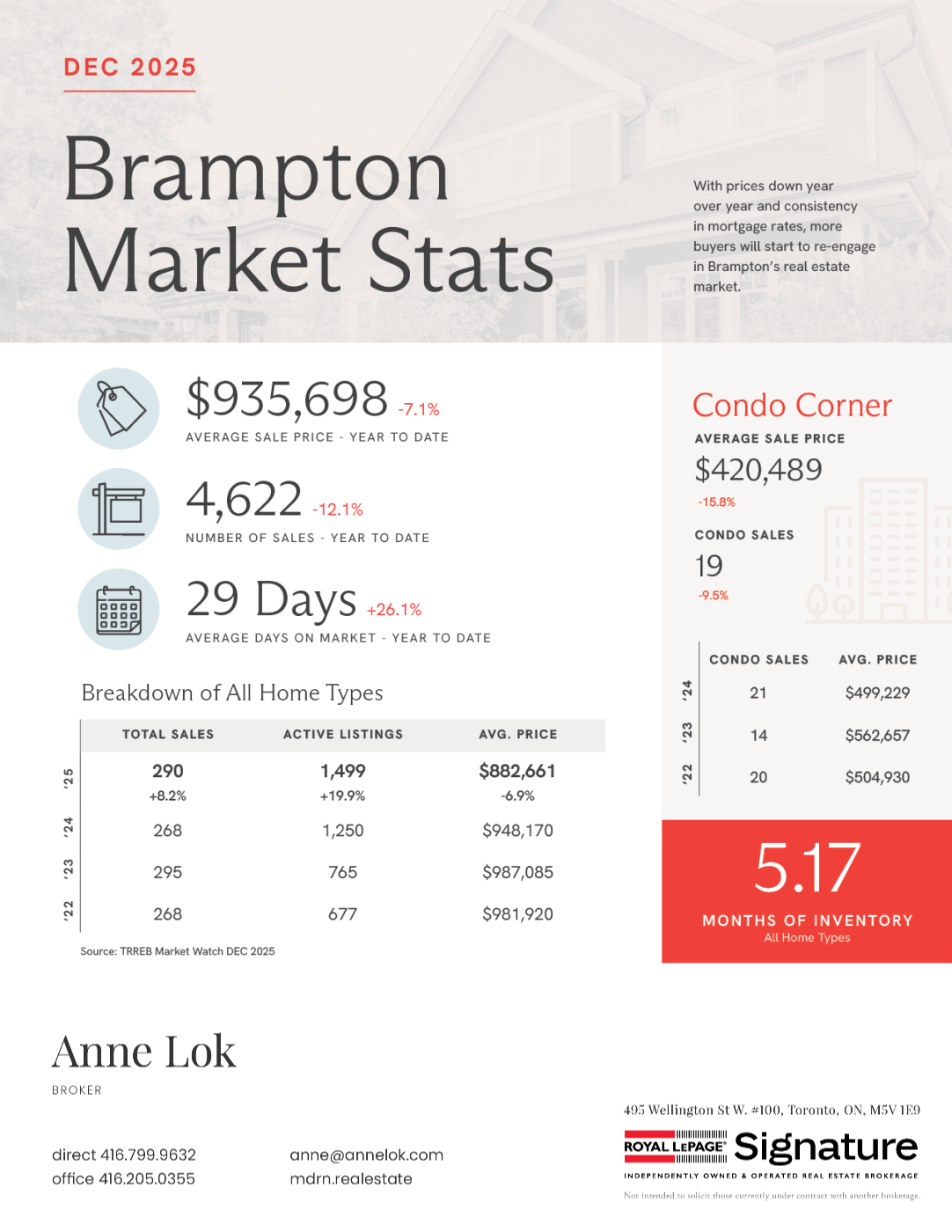
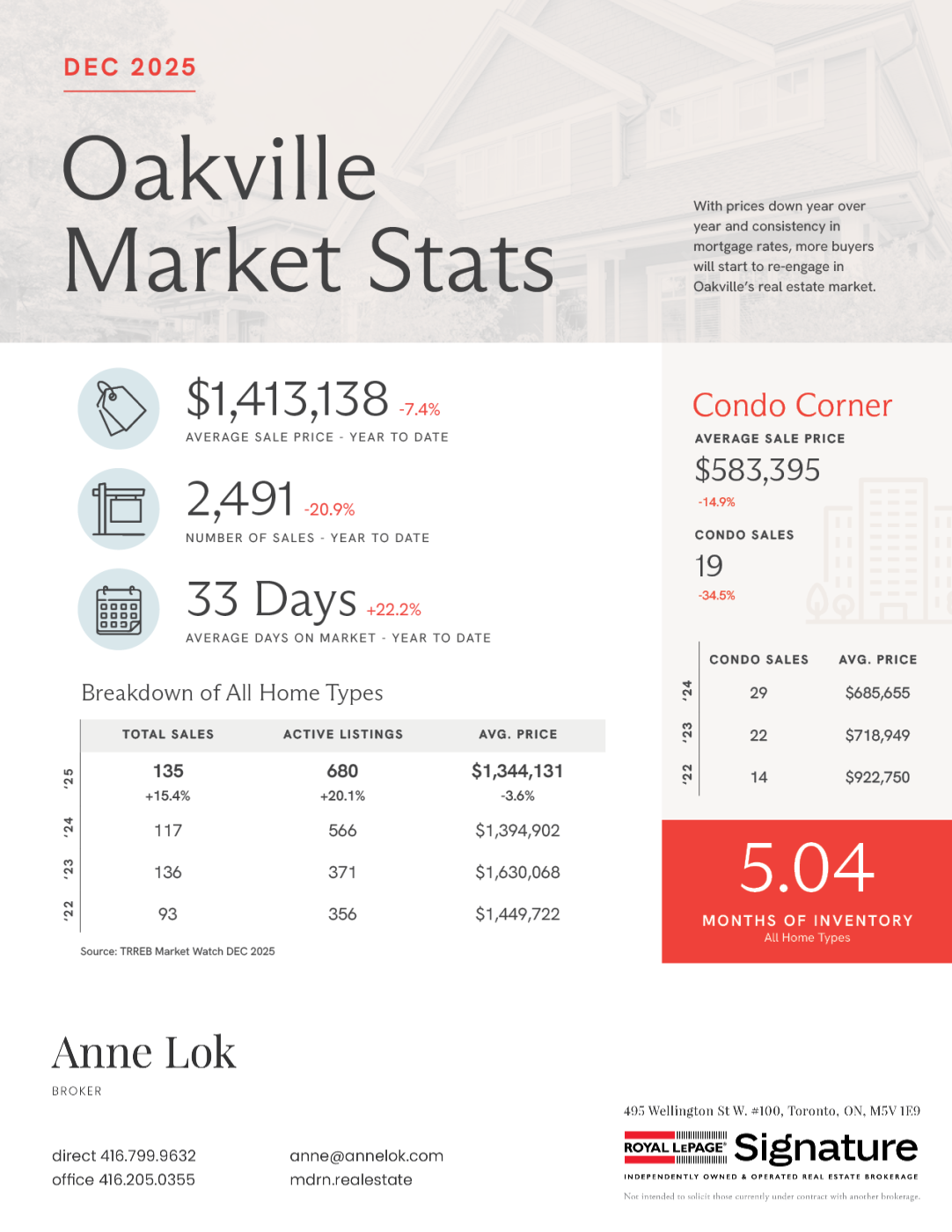
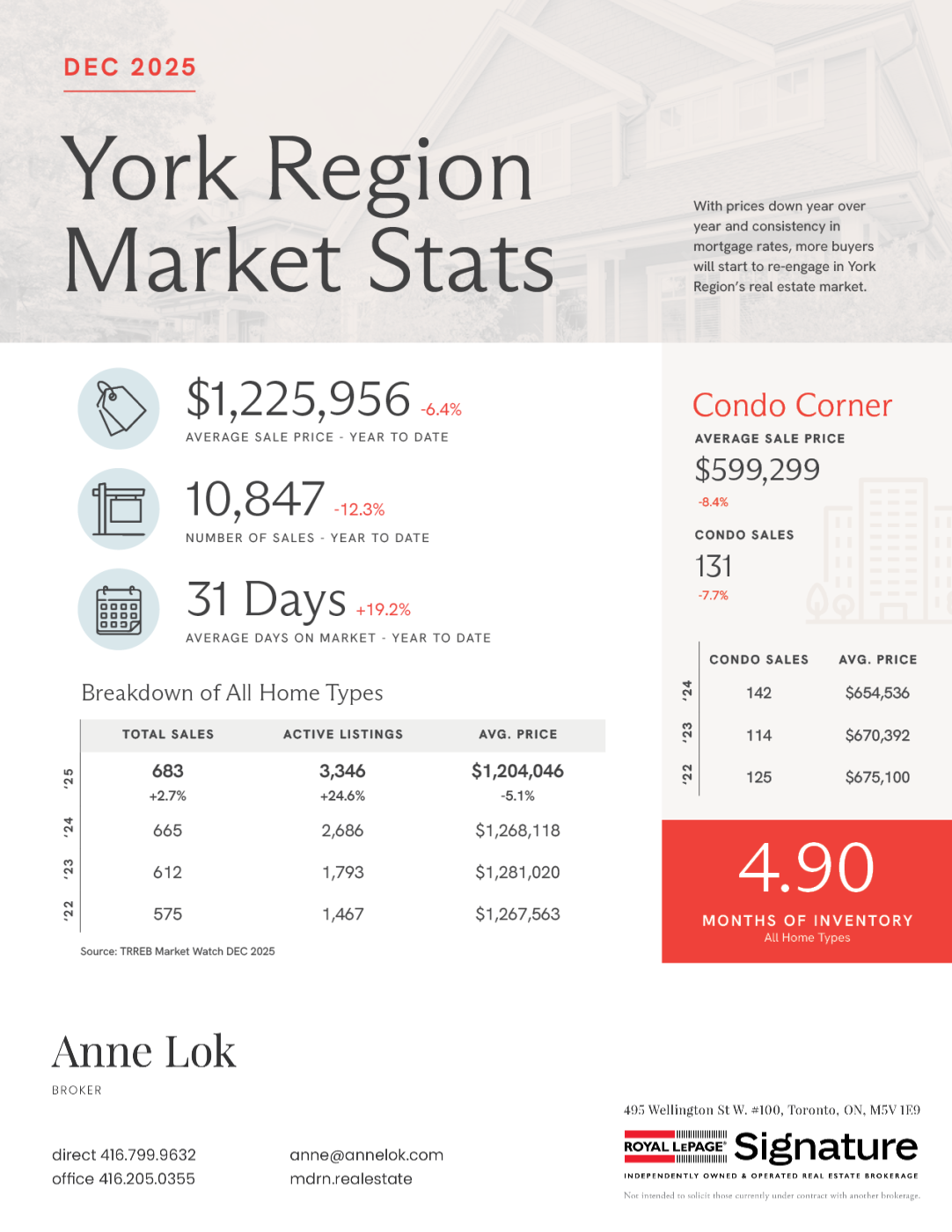
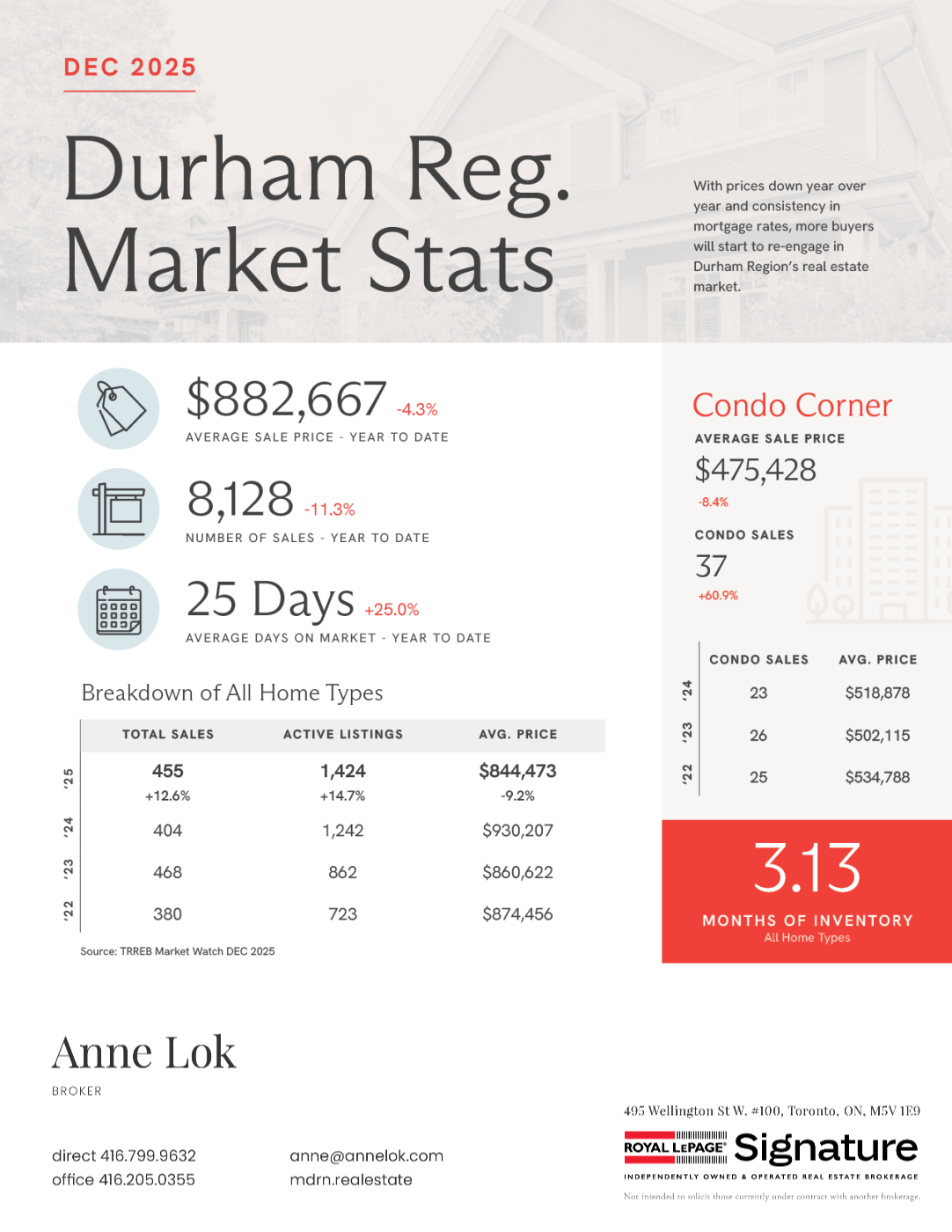
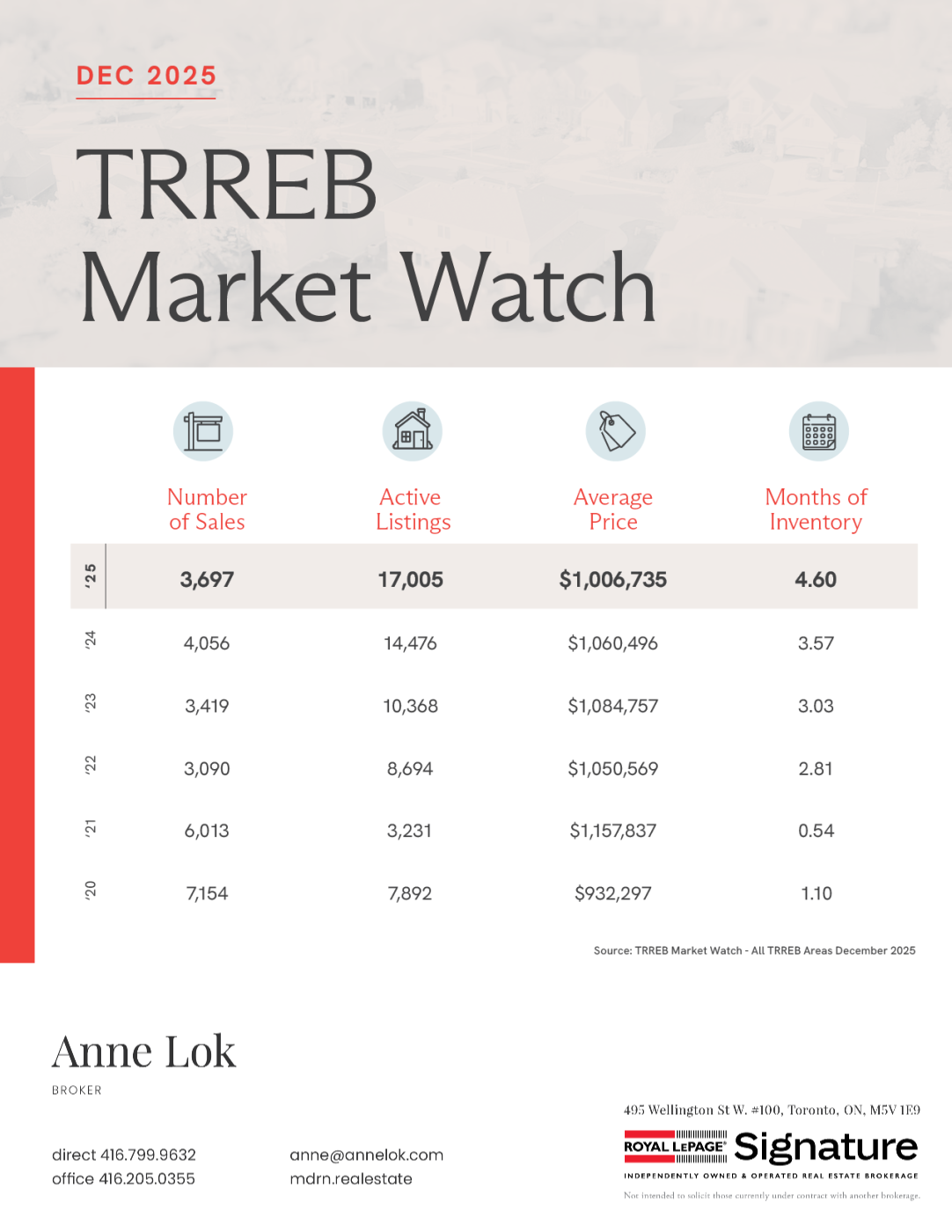
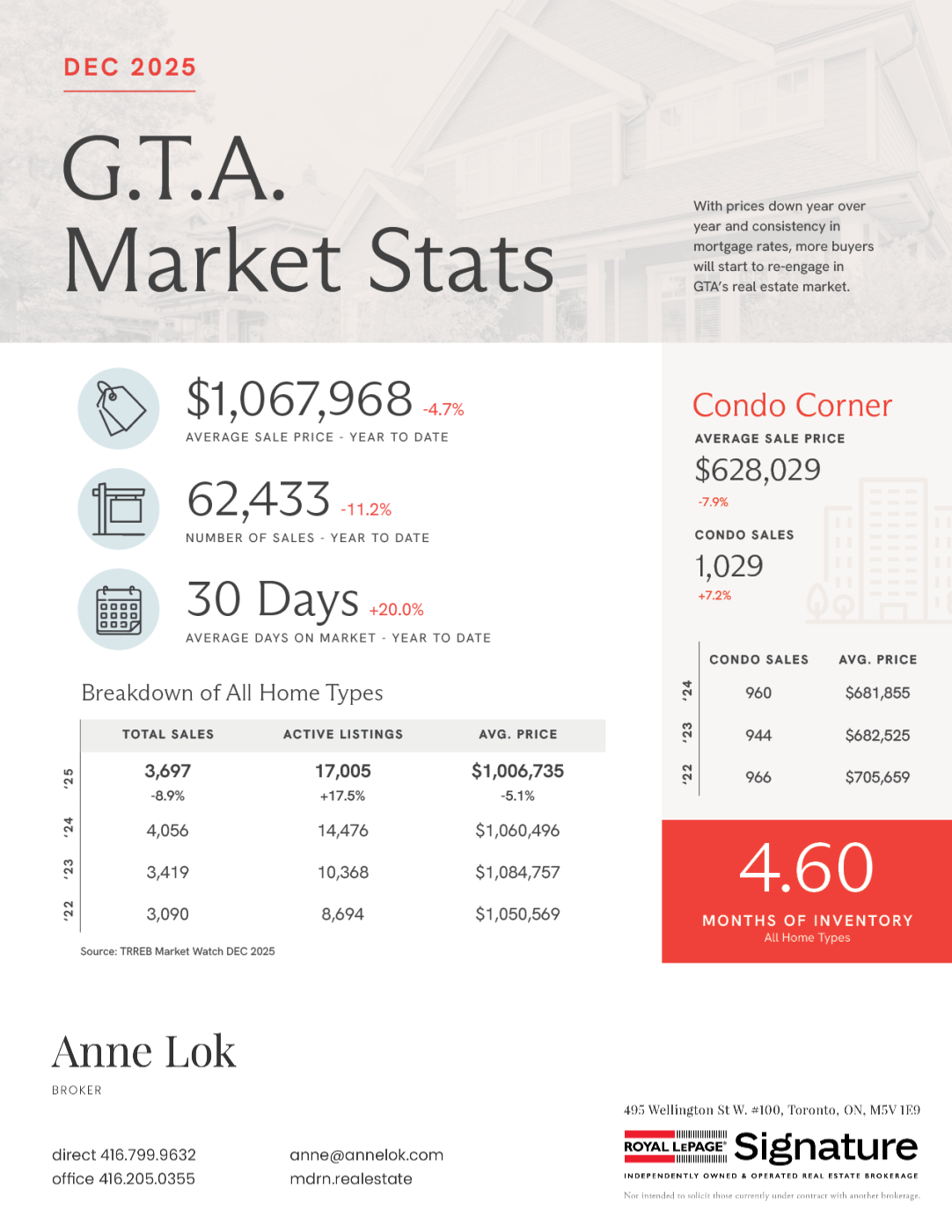
For the calendar year, 2025 saw 62,433 home sales of all types, representing a decline of 11.2% compared to 2024. While this decrease might initially appear concerning, it's important to understand the context. The annual average selling price was $1,067,968, down by 4.7% compared to $1,120,241 in 2024. This price adjustment, combined with declining mortgage rates, has actually created opportunities for buyers who had previously been priced out of the market.

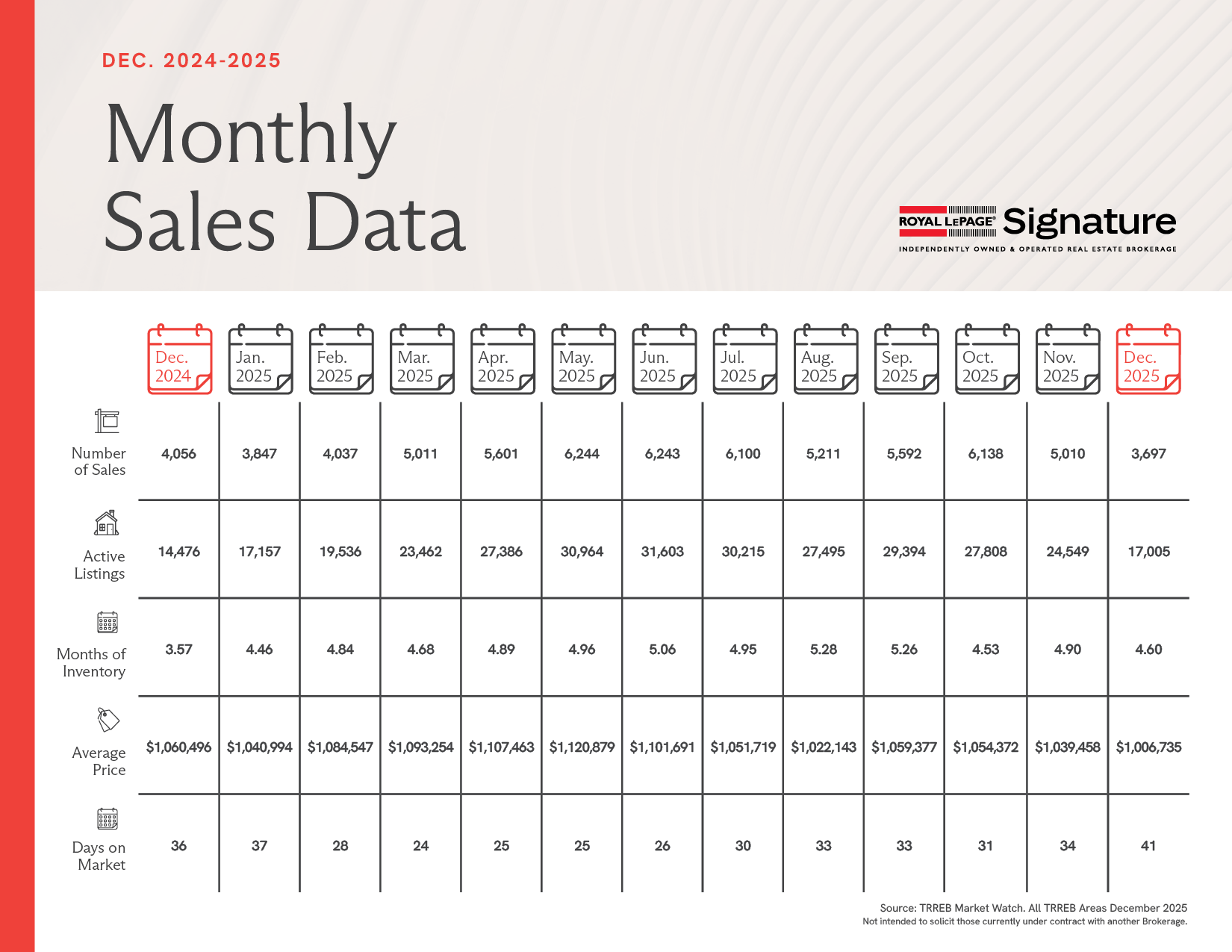
December specifically saw 3,697 home sales reported, down by 8.9% compared to December 2024. The average selling price for the month was $1,006,735, down by 5.1% compared to the previous year. On a seasonally adjusted basis, December home sales were down slightly month-over-month compared to November 2025, while new listings increased, providing buyers with more options to consider.

What's Driving the Market in 2026?

Looking ahead, the outlook for 2026 appears increasingly positive, with many leading economists forecasting a stronger housing market. This optimism is driven in part by recent statements and guidance from the Bank of Canada, which have provided much-needed clarity for prospective homebuyers.

For borrowers, this signals a more stable interest rate environment, one where rates are expected to hold near current levels rather than continue the volatility seen in recent years. While rates may not return to historic lows, the prevailing expectation is for consistency rather than sharp movement. This stability is precisely what many buyers have been waiting for before making their move into homeownership.

The Importance of Economic Confidence

The Toronto Regional Real Estate Board's Chief Information Officer, Jason Mercer, has emphasized that trade relationships and major domestic economic development projects will be essential to improving home sales in the months ahead. This observation highlights a critical factor: GTA households need confidence in their job security before committing to long-term monthly mortgage payments, even in a more affordable market.

This connection between economic stability and housing market activity cannot be overstated. When people feel secure in their employment and optimistic about their financial future, they're far more likely to take the significant step of purchasing a home.

A Year of Renewed Certainty

As a result of these converging factors, 2026 is shaping up to be a year with a renewed sense of certainty that will influence buyer behavior in meaningful ways. Many prospective purchasers who had remained on the sidelines amid uncertainty are expected to re-enter the market, encouraged by clearer expectations around mortgage costs and improved confidence in planning for homeownership.

The combination of improved affordability, rate stability, and growing economic confidence creates a unique window of opportunity for those who have been considering making a move. Whether you're a first-time homebuyer, looking to upsize, downsize, or invest, the current market conditions warrant serious consideration.

Moving Forward

I wish you lots of success and good health in 2026. As we navigate this evolving market together, please never hesitate to reach out and connect with me for all your real estate needs or questions. Whether you're curious about what your home might be worth in today's market, wondering if now is the right time to buy, or simply want to discuss your real estate goals, I'm here to help.

The GTA housing market has shown remarkable resilience, and with the positive indicators pointing toward 2026, there's every reason to approach the year ahead with optimism and strategic thinking.

I look forward to connecting with you soon and helping you achieve your real estate goals in 2026!
About Anne Lok, Broker  B. Arch, M.AAD.

Anne is a Toronto-based realtor with an architectural background, specializing in design-forward properties in historically rich neighbourhoods. She offers a customized approach for each client, helping buyers find homes that blend timeless charm with modern functionality. Anne also guides sellers in showcasing the unique appeal of their properties and assists investors in identifying opportunities with strong potential for growth.

Contact Anne for a Buyer or Seller consultation.

Read

Beyond Canada’s Micro-Condo Crash: Rethinking Space Efficiency for 2026

From the recent BBC News article: "'Somewhere to put worker bees': Why Canada's micro-condos are losing their appeal" (January 2, 2026). The headlines are stark: Toronto's micro-condo market is cratering. Units that sold for $500,000 just a few years ago are now reselling for $300,000s, and the city faces its worst condominium downturn since the 1980s. But before we write the obituary for compact living, we need to understand what actually failed—and what that reveals about the future of thoughtful, design-forward space efficiency.

What Went Wrong in Toronto

The collapse of Toronto's micro-condo market isn't really a failure of small-space living. It's a failure of small-space thinking.

According to Statistics Canada, construction of units under 600 square feet skyrocketed in 2016, and they now make up 38% of condos built in the city, compared with only 7.7% before. These weren't created in response to what people wanted—they were designed for what investors needed: maximum units per square foot, minimal entry prices, and high rent-per-square-foot returns.

The Broken Promise of the Property Ladder

Micro-condos were originally marketed as an affordable entry point—a first step onto the property ladder for young professionals and first-time buyers. The pitch was compelling: sacrifice square footage temporarily to build equity, then trade up to something larger. But the model was fundamentally investor-driven. Nearly 40% of all Toronto condos are investor-owned, and in newly built projects, that figure exceeds 60%.

As housing analyst John Pasalis noted years ago, the risk was clear: when your entire housing supply is driven by what investors want rather than what end-users need, you don't get homes—you get financial instruments. Investors bought micro-units in pre-sales with lower down payments, enabling developers to secure financing and begin construction. But these buyers never intended to live in the units. They were building portfolios, not homes.

The result? As one former resident, Maggie Hildebrand, described her 300-square-foot unit: "It definitely feels like it's just somewhere to put worker bees during the night."

The market has now delivered its verdict. Real estate agents report that buyers increasingly favour slightly larger units, even if it means moving farther from city centers. The pandemic fundamentally shifted how we use our homes, and units built purely for sleeping and commuting no longer serve the way people actually live. More critically, the property ladder promise has collapsed—investors who bought micro-condos in pre-sales are finding units worth less than they paid four or five years ago.

The Critical Distinction: Efficiency vs. Minimalism

Here's what the Toronto crash teaches us: space efficiency is not the same as space minimization.

True space efficiency means designing environments where every square foot works harder and better. It's about functionality, flexibility, and quality of life—not just fitting more units into a building envelope or hitting a low price point.

Consider the math that drove the micro-condo boom. Over 40% of condos in Ontario are investor-owned, and in many newly built projects in Toronto and Vancouver, that number exceeds 60%. When investment yield becomes the primary design driver, human needs become secondary. The result is spaces that technically contain the elements of a home but fail to support actual living.

What Intelligent Space Efficiency Actually Looks Like

The failure of investor-driven micro-units doesn't mean we should abandon thoughtful compact design. In fact, the housing affordability crisis makes it more urgent than ever. But the approach needs to fundamentally shift.

Multi-Functional Design Beyond "Flex Spaces"
The industry's answer to shrinking units has been to create so-called "flex spaces"—but these became glorified closets, and kitchens got smaller to compensate. True multi-functionality means designing spaces that can transform without compromising their primary functions. A dining area that accommodates work without sacrificing the ability to host a meal. A living room with integrated storage that doesn't feel like a murphy bed showroom.

Post-Pandemic Spatial Requirements
Remote work has fundamentally changed residential design requirements. People need dedicated workspace, proper storage for equipment and supplies, and acoustic separation between work and living areas—even in compact footprints. The micro-condos that failed were designed for a world where home was just where you slept between office days.

Quality Over Quantity
In Toronto's median new condo, built after 2016, the average size is just 665 square feet—down from over 1,100 square feet in the 1980s. But this wasn't about consumer demand, it was about yield. The market is now correcting this imbalance, with developers quietly adding up to 10% more square footage to floor plans because smaller units have become the hardest to sell.

The Design-Forward Opportunity

For design-focused practitioners, this market correction is actually an opportunity. The failure of cookie-cutter micro-units creates demand for smarter approaches to efficient living.

Thoughtful Typology Innovation
Instead of studios that feel like hotel rooms, what if we reimagined how different spaces relate to each other? Separated sleeping alcoves that provide privacy without requiring full walls. Kitchens that integrate with living areas without dominating them. Bathrooms that serve as buffer zones for acoustic privacy.

Material and Detail Strategies
In compact spaces, every surface, transition, and detail carries more weight. This is where design sophistication matters most—integrated storage, clever lighting strategies that expand perceived space, material selections that add warmth without visual clutter, and furniture that's genuinely built-in rather than just small-scale.

Livability Metrics
The industry needs new metrics beyond just square footage and price per square foot. What about natural light exposure? Cross-ventilation potential? Storage volume relative to living area? Acoustic separation between spaces? These factors dramatically impact livability but are rarely prioritized in investment-driven development.

Looking Forward: The Post-Crash Paradigm

Developers say the market will likely shift from short-term investors seeking quick profits toward people who plan to settle in the condos they're buying. This fundamental change in who we're designing for could reshape the next generation of compact housing.

The Toronto micro-condo crash shouldn't be read as evidence that urban populations don't need efficient housing solutions—affordability pressures remain intense. Rather, it's a market correction away from cynical space minimization toward genuine space efficiency.

For 2026 and beyond, the opportunity lies in creating homes that are purposefully compact rather than merely small—spaces designed with sophistication and care for the people who will actually live in them, not just spreadsheets calculating return on investment.

The question isn't whether we need space-efficient housing. It's whether we're willing to design it properly. Toronto has shown us what happens when we don't.


The micro-condo market correction represents one of the most significant housing stories entering 2026, with implications for developers, designers, and residents across North American cities. Understanding what failed—and why—is essential for anyone working at the intersection of design and real estate moving forward.


About Anne Lok, Broker  B. Arch, M.AAD.

Anne is a Toronto-based realtor with an architectural background, specializing in design-forward properties in historically rich neighbourhoods. She offers a customized approach for each client, helping buyers find homes that blend timeless charm with modern functionality. Anne also guides sellers in showcasing the unique appeal of their properties and assists investors in identifying opportunities with strong potential for growth.

Read
This website may only be used by consumers that have a bona fide interest in the purchase, sale, or lease of real estate of the type being offered via the website. The data relating to real estate on this website comes in part from the MLS® Reciprocity program of the PropTx MLS®. The data is deemed reliable but is not guaranteed to be accurate.